
PERSONAL FINANCE
What Is Coast FIRE? How to Calculate Your Coast FIRE Number
Coast FIRE lets you stop saving for retirement once your investments can grow to your target through compound interest alone. Learn how to calculate your Coast FIRE number and plan your retirement in Canada.

PERSONAL FINANCE
What Is Barista FIRE? How to Semi-Retire Early With Part-Time Work
Want to retire years before the traditional retirement age? Learn how Barista FIRE works, how to calculate your Barista FIRE number, compare it with Lean FIRE and Coast FIRE, and build a flexible semi-retirement plan with part-time income.

PERSONAL FINANCE
Disposable Income: What It Is, Formula, Examples & How It Differs From Discretionary Income
Disposable income is the money left after paying taxes and mandatory deductions. Learn the formula, see practical examples, understand how inflation affects purchasing power, and discover how disposable income differs from discretionary income.

PERSONAL FINANCE
What Is an RDSP? Benefits, Eligibility & How It Works
An RDSP (Registered Disability Savings Plan) is a government-supported savings plan for Canadians with disabilities who qualify for the Disability Tax Credit (DTC). Learn how RDSP eligibility works, contribution limits, Canada Disability Savings Grants an
PERSONAL FINANCE
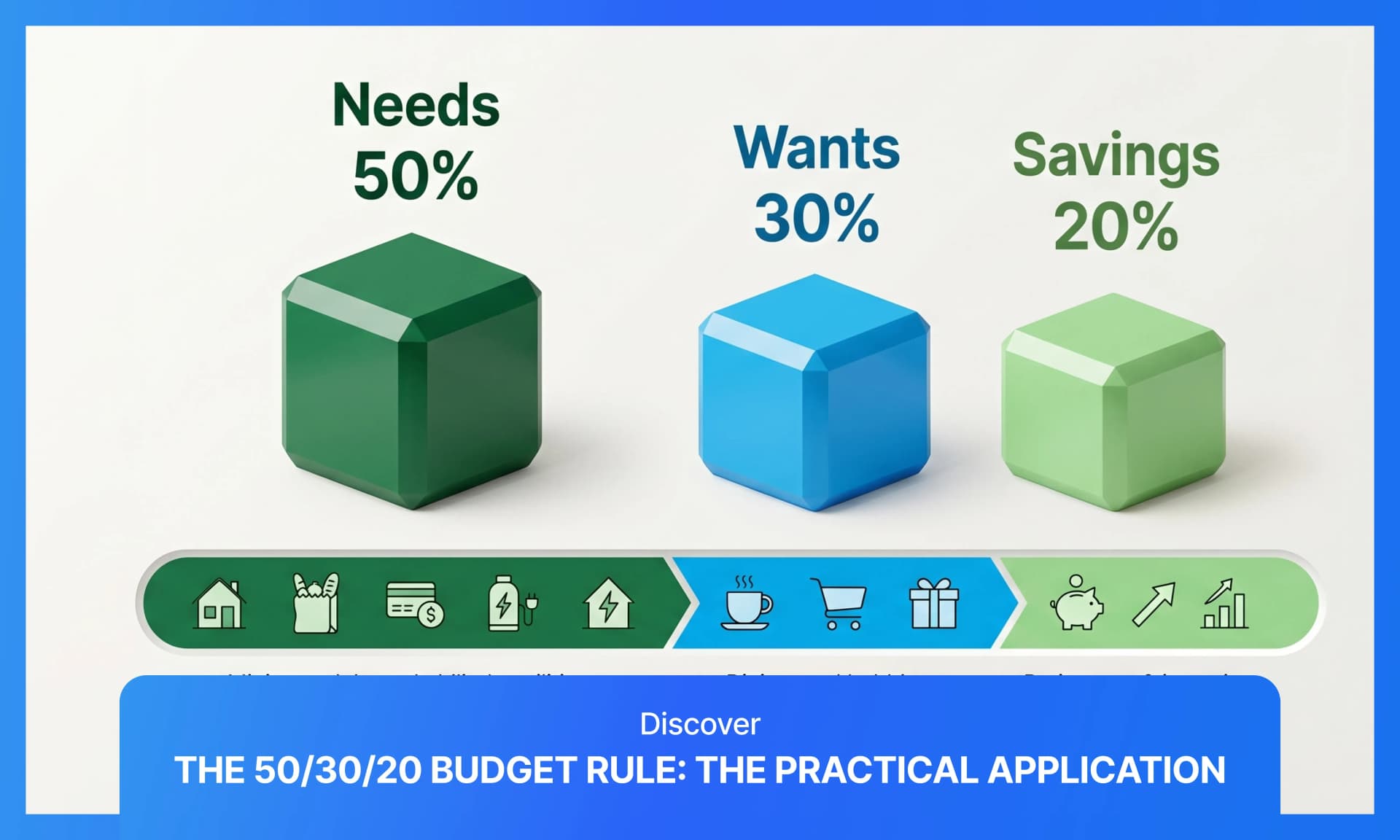
The 50/30/20 Budget Rule: How to Budget Your Money Without Going Crazy
The 50/30/20 budget rule is one of the simplest ways to manage your finances. Learn how to divide your after-tax income into needs, wants, and savings, calculate your budget correctly, and adapt the rule for high-cost cities in Canada.

PERSONAL FINANCE
Value Investing 101 — Buying Stocks Below Their True Worth
Discover how value investing helps investors identify undervalued stocks and build long-term wealth. Learn key principles, valuation methods, risks, and strategies inspired by Benjamin Graham and Warren Buffett.

PERSONAL FINANCE
How to Set Financial Goals (Step-by-Step Guide)
A practical step-by-step guide to setting financial goals in Canada. Learn how to plan across short, medium, and long-term timelines, choose the right accounts, manage debt, and stay on track.

PERSONAL FINANCE
Discretionary Spending: What It Is and How to Control It
Discretionary spending refers to non-essential expenses like dining out, travel, and entertainment. This guide explains how it works in Canada, how to calculate discretionary income, and practical strategies to control unnecessary spending.

PERSONAL FINANCE
Risk-Free Interest Rate: Meaning, Formula, and Examples
The risk-free interest rate represents the theoretical return on an investment with zero risk. It plays a crucial role in financial models, investment decisions, and economic analysis.

PERSONAL FINANCE
Envelope Budgeting: A Simple Money Management System
Envelope budgeting is a simple yet powerful method where you allocate every dollar of your income into specific spending categories. By setting clear limits and stopping spending once an envelope is empty, this system helps control overspending and build

PERSONAL FINANCE
Credit Monitoring in Canada: How It Works and Why It Matters
Credit monitoring tracks your Equifax and TransUnion files, sending alerts for suspicious activity, score changes, and errors—helping Canadians prevent fraud and build credit confidently.
1
2
3