What is Inflation?
Inflation is an economic term for a general increase in the price of goods and services and a loss of purchasing power. It can be a product of several factors and can be categorized under three broad categories:
- Demand-pull inflation: where the demand for goods and services exceeds their supply.
- Cost-Push Inflation: where an increase in the cost of production, such as higher wages or rising prices for raw materials, drives up the price of goods and services.
- Built-In Inflation: Also known as wage-price Inflation, where workers demand higher wages, leading to higher production costs and, consequently, higher prices.
A healthy amount of inflation is commonly associated with increased economic activity and low unemployment. Thus, there is a need to manage its levels. In Canada, this task is overseen by the Bank of Canada through its monetary policy. The goal is to maintain inflation between the 1-3% range.
Canada's Inflation Situation
The Canadian economy has experienced the effects of inflation in recent years. At its peak, inflation touched a four-decade high of 8.1% in June 2022. What was behind this spike in inflation? Well, it was the perfect storm of events that included the economy's reopening after the COVID-19 pandemic, labor shortages, and the domestic housing crisis.
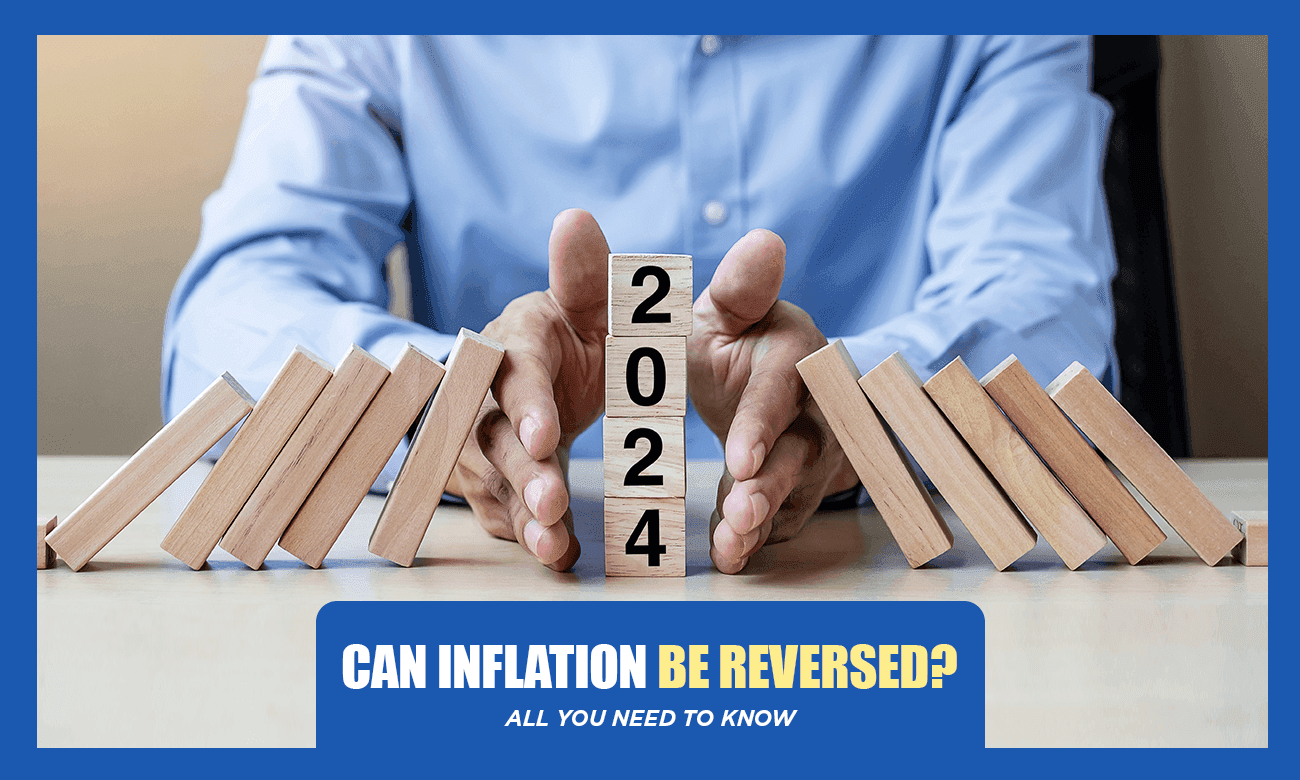
Can Inflation be Reversed?
Yes, reversing inflation is possible but complex, involving a combination of monetary and fiscal policies. It includes:
- Fiscal and Monetary Policy: Governments can influence inflation through taxation, interest rate hikes, and spending. Reducing government spending or increasing taxes can decrease the amount of money circulating in the economy, potentially lowering inflation. However, these measures can also slow economic growth and increase unemployment.
- Supply-Side Policies: Addressing inflation from the production side involves policies that increase the efficiency and capacity of the economy. This can include investing in infrastructure, education, and technology to boost productivity and reduce production costs over time.
- Price Controls and Subsidies: In some cases, governments may impose price controls or provide subsidies to stabilize prices. However, these measures can lead to shortages and reduce the quality of goods and services if not managed carefully.
Reversing Inflation in the Canadian Context
In the Canadian context, the Central Bank has been proactive in reining in inflation through its monetary policies. The Bank of Canada accomplished this by raising interest rates, making borrowing more expensive, reducing spending and investment, and ultimately lowering inflation.
The BoC initiated 10 interest rate hikes between 2022 and 2023, bringing the key interest rate up to 5% for the first time since 2001. The measures have helped quell inflation, which was at 2.9% as of March 2024.
The BoC has maintained its benchmark lending rates even with the improving situation. The logic being that any fast moves could undo the positives achieved by the rate hikes. The Governor of the BoC, Tiff Macklem, said as much when announcing the decision to maintain the rates.
"We don't want to leave monetary policy this restrictive longer than we need to. But if we lower our policy interest rate too early or cut too fast, we could jeopardize the progress we've made bringing inflation down."
Challenges in Reversing Inflation
Reversing inflation is not without its challenges. Economies run the risk of stifling growth and employment leading up to recession. The challenges can be summarized as below:
- Slowing Economic Growth: Policies to reduce inflation can also slow economic growth and increase unemployment, leading to economic and social issues.
- Misleading Expectations: Inflation expectations can become entrenched. If people expect prices to keep rising, they may act in ways that perpetuate inflation, such as demanding higher wages.
- Global Challenges: In situations where inflation is influenced by international events, such as oil price shocks or supply chain disruptions. National governments and central banks have limited recourse and may be unable to initiate steps to cool down an economy.
Conclusion
Inflation is a multifaceted phenomenon influenced by various factors and can significantly impact the economy. While it can be reversed, it requires careful and often tricky policy decisions. Understanding the underlying causes and employing a mix of monetary, fiscal, and supply-side policies can help manage and reduce inflation, ensuring economic stability and growth.