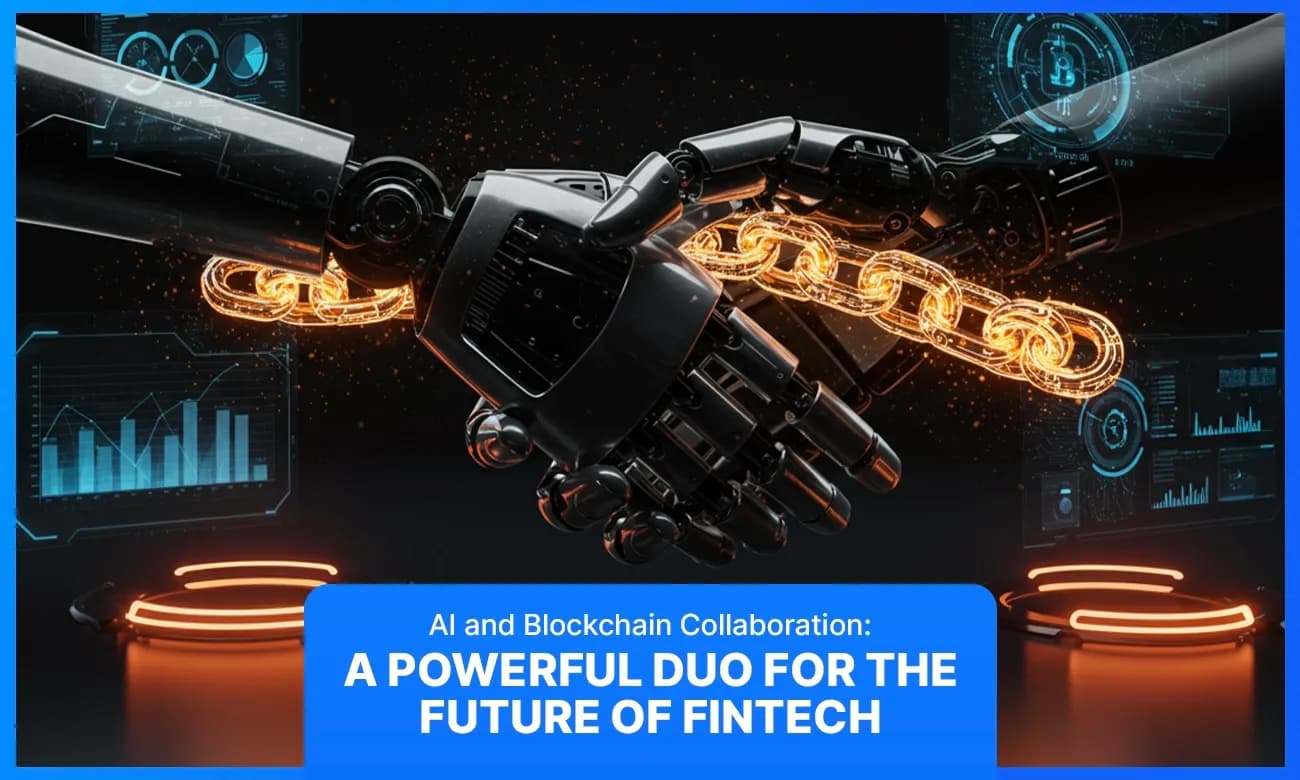
AI and Blockchain Collaboration: A Powerful Duo for the Future of Fintech
Two is better than one, especially if they bring out the best in each other, together. This is true not just in human partnerships, but also in the world of technology. In the case of financial technology, innovations such as Artificial Intelligence (AI) and blockchain can be considered a “power couple.”
Individually, these two transformative technologies are reshaping how people approach trust, security, and automation. Together, they put intelligent automation, transparent systems, and unprecedented innovation in a higher gear.
Understanding the Technologies
What is AI?
AI simulates human intelligence processed by machines, such as computer systems. AI systems ingest large amounts of labeled training data. These are analyzed for correlations and patterns to make predictions or decisions. As a result, it can learn, reason, and self-correct.
AI includes different subfields such as:
- Machine Learning (ML) focuses on enabling systems to learn from data, improving performance without the need for complicated programming.
- Natural Language Processing (NLP) - focuses on enabling computers to understand, interpret, and generate human language.
Computer Vision – focuses on enabling computers to “see” and interpret images and videos while mimicking human vision.
In the field of fintech, AI is helping businesses to enhance their financial processes, improve customer experience, and achieve operational efficiency. This technology also powers innovations such as fraud detection algorithms, predictive analytics, and chatbots.
What is Blockchain Technology?
Blockchain is akin to a digital ledger that records all financial transactions. This digital ledger is shared and accessible to many people simultaneously, and once something is written in that ledger, it cannot be removed or revised.
In a blockchain, each page of a recorded transaction is added to other completed pages to create a chain that everyone can access, verify, and trust. Blockchain is a decentralized and distributed ledger because it is guaranteed by everyone who has access to it. Blockchain technology was initially developed for cryptocurrency. Now, it is also used for digital identity, smart contracts, and financial record-keeping.
Also read: How Blockchain in Remittance Works - 2024
Why AI and Blockchain Work Better Together
Forging a bond between AI and blockchain enables systems to leverage both sets of technologies simultaneously. AI enhances ability and decision-making, while blockchain provides transparency and security.
As mentioned earlier, AI relies heavily on data. But what happens if the data is flawed or biased? The results will be the same. In this case, blockchain can track the origin of the data to ensure its legitimacy and reliability. This gives everyone confidence in the quality of data, which makes the AI better and more trustworthy. On the other hand, AI can help optimize blockchain networks through data analysis to identify challenges or congestion, improve performance, and predict security risks. Performance improvements can enhance the overall speed and efficiency of the network, ultimately helping to reduce fees.
Together, they form an intelligent and trustworthy automation layer that streamlines processes while protecting data privacy and system integrity. This results in an “automation and trust loop” where humans’ trust in an AI system influences how the system is used and improved, which helps build and maintain trust.
Real-World Fintech Applications
Combining AI and blockchain technology systems in fintech applications has been proven to be an efficient and successful move. Here are some areas where these two have improved fintech applications:
Fraud Detection & Risk Assessment
In the era of digital transactions and instant payments, fraud detection must keep up. AI-powered systems excel at detecting anomalies in real-time. It can analyze massive datasets to identify subtle patterns that signal suspicious activity. These include inconsistent geolocation, abnormal spending behavior, or rapid-fire transactions.
By integrating with blockchain’s immutable ledger, every action can be logged permanently and transparently, making fraud both detectable and traceable. If a flagged transaction occurs, the organization can instantly audit the event, reviewing the full transaction history and context. It reduces false positives and helps mitigate financial losses more efficiently.
Example: A neobank could utilize AI to identify rapid account access attempts originating from multiple countries. Blockchain logs can verify the exact access timeline and prevent data tampering during investigations.
Also read: How to Stay Safe from Money Transfer Fraud
Smart Contracts & Automated Compliance
Smart contracts are self-executing agreements coded on blockchain platforms, triggering actions (like fund transfers or document submissions) once specific conditions are met. However, traditional smart contracts are rigid and may not respond well to complex or evolving conditions.
In this case, AI brings adaptability. It can analyze and interpret complex legal language, assess the context (such as changing market conditions or updated regulations), and suggest or implement modifications in real-time.
This synergy automates compliance with Know Your Customer (KYC), Anti-Money Laundering (AML), General Data Protection Regulation (GDPR), and other financial regulations, reducing human error and increasing responsiveness to policy changes.
Example: In cross-border trade finance, AI can detect regulatory updates in various jurisdictions and adjust the execution of smart contracts, accordingly, automating tax deductions or enforcing embargo rules.
Identity Verification & KYC/AML
Modern finance demands a seamless yet secure onboarding experience. Traditional identity checks are slow, manual, and prone to fraud. But thanks to innovations in AI and blockchain, this is now a thing of the past.
Blockchain stores verified, decentralized digital identities—protected from tampering or duplication. Meanwhile, AI enhances this by analyzing biometric inputs (such as facial recognition or typing patterns) and behavioral metrics (login time, device type, and transaction rhythm). This dynamic verification ensures that the user is who they claim to be every time.
Together, they enhance KYC/AML procedures, reduce customer friction, and dramatically improve compliance speed and accuracy.
Example: A fintech app can instantly verify a user's government-issued ID against a blockchain registry, while AI simultaneously cross-checks behavioral data for consistency with past sessions, flagging only high-risk profiles for manual review.
Tokenization of Assets & Micro-Investments
Tokenization is the digital representation of real-world assets, such as property, art, stocks, or commodities, on the blockchain. This enables fractional ownership, allowing users to invest in smaller amounts than would be possible otherwise.
AI plays a critical role in:
- Valuing assets using market data, historical trends, and risk factors
- Recommending investment bundles tailored to user behavior and goals
Monitoring price fluctuations and issuing intelligent alerts or auto-investment triggers
Together, blockchain ensures the secure and immutable ownership records of these tokenized assets, while AI facilitates smarter participation and dynamic portfolio management, thereby democratizing access to wealth creation.
Example: A retail investor could use an AI-driven robo-advisor to purchase 50 USD worth of a real estate token, verified and managed via blockchain, enabling participation in assets previously reserved for high-net-worth individuals.
Predictive Analytics in Lending & Credit Scoring
Traditional credit scoring models rely heavily on centralized credit bureaus and limited historical data, which often exclude underserved populations or misclassify applicants based on outdated models.
AI models, when trained on blockchain-secured financial data, can build far more accurate and holistic borrower profiles. These models can:
- Evaluate alternative data (such as mobile phone payments, transaction patterns)
- Spot trends in repayment behavior
Predict default likelihood with lower bias and higher transparency
Blockchain ensures the origin and permanence of this data, making the models auditable and trustworthy.
Example: A fintech lender in an emerging market could offer credit to users without formal credit history by assessing blockchain-logged microtransaction behavior (like utility or mobile top-up payments), enabling financial inclusion.
Challenges in AI and Blockchain Collaboration
Despite its numerous contributions to the improvement of fintech and other industries, the partnership of AI and blockchain also faces several challenges, including scalability, interoperability, and regulatory concerns.
AI’s Challenges
Data is the heart of AI. AI systems are only as effective as the data on which they are trained. Thus, it can be a challenge to acquire diverse, accurate, and representative datasets.
The “Garbage In, Garbage Out” (GIGO) phenomenon is another challenge in AI. This means that if the input data fed into an AI model is flawed, the output will also be flawed. Thus, it is essential to preprocess and filter all the data before running it in the AI system to ensure that the AI model is trained on accurate and representative data.
Blockchain Technology’s Challenges
Blockchain grapples with the challenge of handling large volumes of transactions while maintaining optimal performance.
Another issue is throughput and latency. The former refers to the number of transactions a blockchain network can process within a given time frame. The latter is the time it takes for a transaction to be confirmed. High throughput and low latency are crucial for blockchain networks to compete with traditional payment systems and support real-time use cases.
Emerging Trends and the Future of AI-Blockchain Synergy
The convergence of AI and blockchain is ushering in a new era of fintech innovation. Decentralized AI marketplaces now allow developers to trade models and data using smart contracts and tokens, making advanced tools more accessible. AI-driven tokenomics dynamically adjusts supply and incentives, stabilizing blockchain ecosystems in real-time. At the governance level, DAOs enhanced by AI are optimizing treasury management and enabling data-informed, transparent decision-making.
Sustainability is also at the forefront. Energy-efficient consensus models, such as Proof-of-Stake, paired with AI-optimized systems and Layer 2 solutions, are helping to reduce environmental impact. As ESG standards rise, these innovations highlight a future where AI and blockchain evolve as interdependent forces powering a decentralized, intelligent, and sustainable digital economy.