The Beauty of Jamaica
Several nations are popularly known for their beautiful beaches, captivating sunsets, and pearly white sand, but Jamaica sets itself apart from these other countries with its uniqueness
From being the only country that does not have red, white, or blue in its flag to being the largest English-speaking island in the Caribbean Sea, all things in Jamaica are just as unique.
Even the island's name, Jamaica, is derived from the Arawak word Xaymaca, which means "land of wood and water" or "land of springs." The name holds to this fact because the island has countless rivers and streams.
Jamaica's unique culture—from music to clothes and lingo—has spread to some of the smaller Caribbean islands.
The most notable example of how Jamaican culture has expanded internationally is in the entertainment industry, where Jamaican Dancehall and Reggae have impacted foreign musical talents. The end product is a constantly growing musical contribution that blends various locations, cultures, and individuals.
The History of Jamaica
The history of Jamaica also extensively showcases the growth and prosperity of the nation over time, influencing different aspects of their lives today.
If we look at their language, Jamaica proves to be exotic, having the Jamaican language be a fusion of numerous languages coming together to form the Jamaican Patois.
Its language and culture were influenced by many different cultures, just as the country's motto, "Out of Many, One People," created a singular and vibrant language.
If these facts were not enough, Jamaica also shows uniqueness in its monetary policies and currency.
Jamaica's Monetary Policy
The Monetary Policy Committee of the Bank of Jamaica sets monetary Policy to achieve the inflation target of 4%–6.0% set by the Minister of Finance in April 2021.
The Central Bank uses monetary policy to maintain price stability. The Bank of Jamaica's monetary policy aims to meet the Minister's medium-term, continuous inflation target.
This level of inflation will support Jamaica's long-term growth and development, as determined by the change in the consumer price index reported by the Statistical Institute of Jamaica.
To achieve low, stable, and predictable inflation, the Bank of Jamaica has adopted full-fledged inflation targeting (FFIT) as its monetary policy framework.
The Central Bank pays fiscal institutions interest on their current account balances to meet its affectation target. The Bank uses its policy rate in an interest rate corridor environment.
Open request operations and reserve conversion rate adjustments are also part of its foreign exchange request management under the Government's flexible exchange rate governance policy.
Jamaican Banknotes
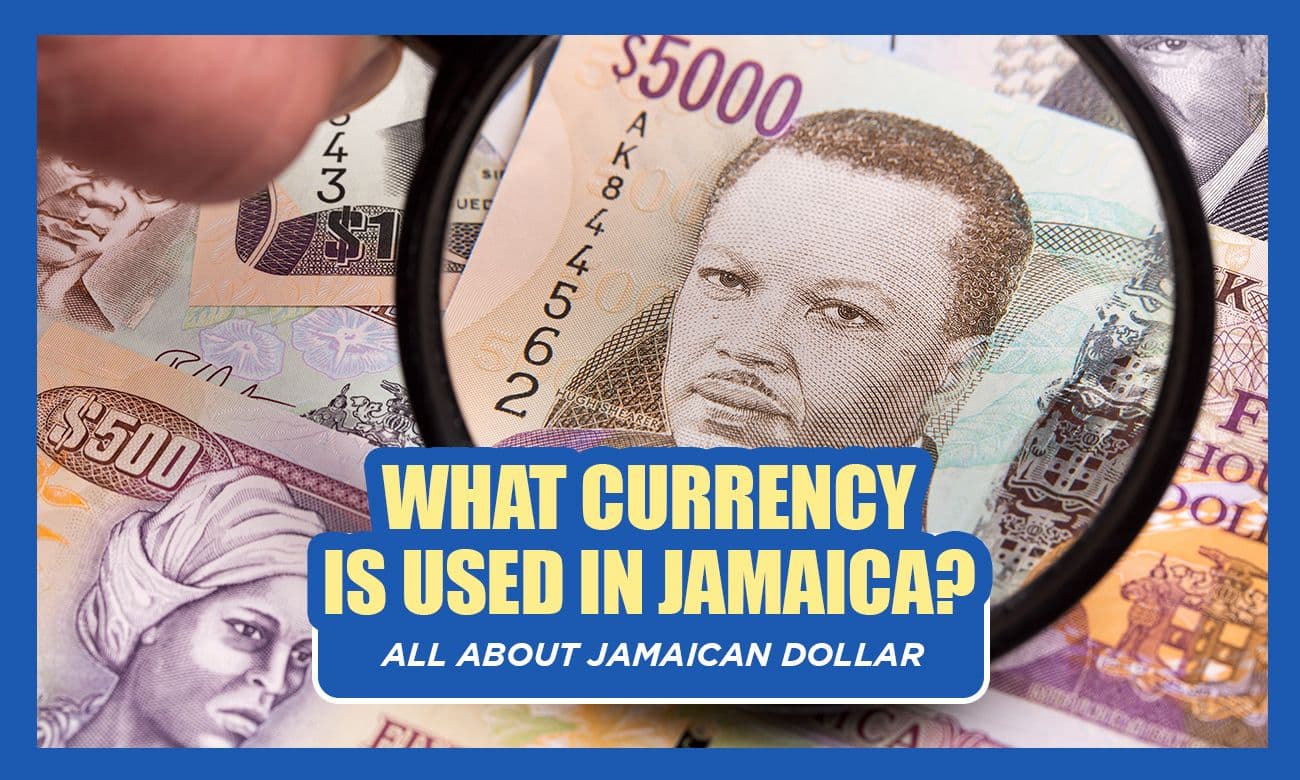
As stated by the Bank of Jamaica, Jamaica issued Jamaican banknotes in denominations of $50, $100, $500, $1000, and $5000. The size of each note is the same—145 x 68 mm.
The portrait on each note serves as the unique watermark for each. On the face of each note, the serial number appears twice: vertically to the left of the image and horizontally to the far right. The date of printing and the Governor of the Bank of Jamaica's signature is also included.
All notes, except the $1000 and $5000, feature specialized visual aids on the front. Instead, these high-value notes have their denomination printed in bold numerals in the bottom right-hand corner.
The portrait of a Jamaican national hero or a former Prime Minister appears on the front of each note. Famous landmarks and local scenes appear on the back.
Jamaica's Currency
The pound sterling was the official currency before the introduction of the Jamaican dollar. The Jamaican House of Representatives unanimously approved the introduction of the dollar to replace the Jamaican pound on January 30, 1968.
Statistically, citizens usually exchanged Jamaican dollars for United States dollars. Most travelers to Jamaica come from the United States and need to exchange their currency for that of the islands.
Tourism and mining, which generate most of Jamaica's foreign exchange, are its main industries. Other sectors that contribute the most dollars to their economy are agriculture, manufacturing, insurance, and financial services.
The following denominations are available: $50, $100, $500, $1,000, and $5,000. The Jamaican dollar inflated severely, so even though the cost of living is cheaper than in the US, a $5,000 note can only buy two days' worth of meals.
Jamaican coins also showcase the uniqueness of the country itself. Today, there are coins of 1, 10, and 25 cents and 1, 5, 10, and 20 Jamaican dollars.
The Bottom Line
Jamaica has a rich history in every aspect of its culture, which has become the cornerstone of the country. What has made Jamaica so enjoyable is not only its uniqueness but also its past and how it affects them currently in the present.
If you need to send funds to your family or friends in this beautiful country, consider Remitbee. Remitbee is a fast, reliable, and easiest remittance from Canada to Jamaica and other countries.
Get started now.