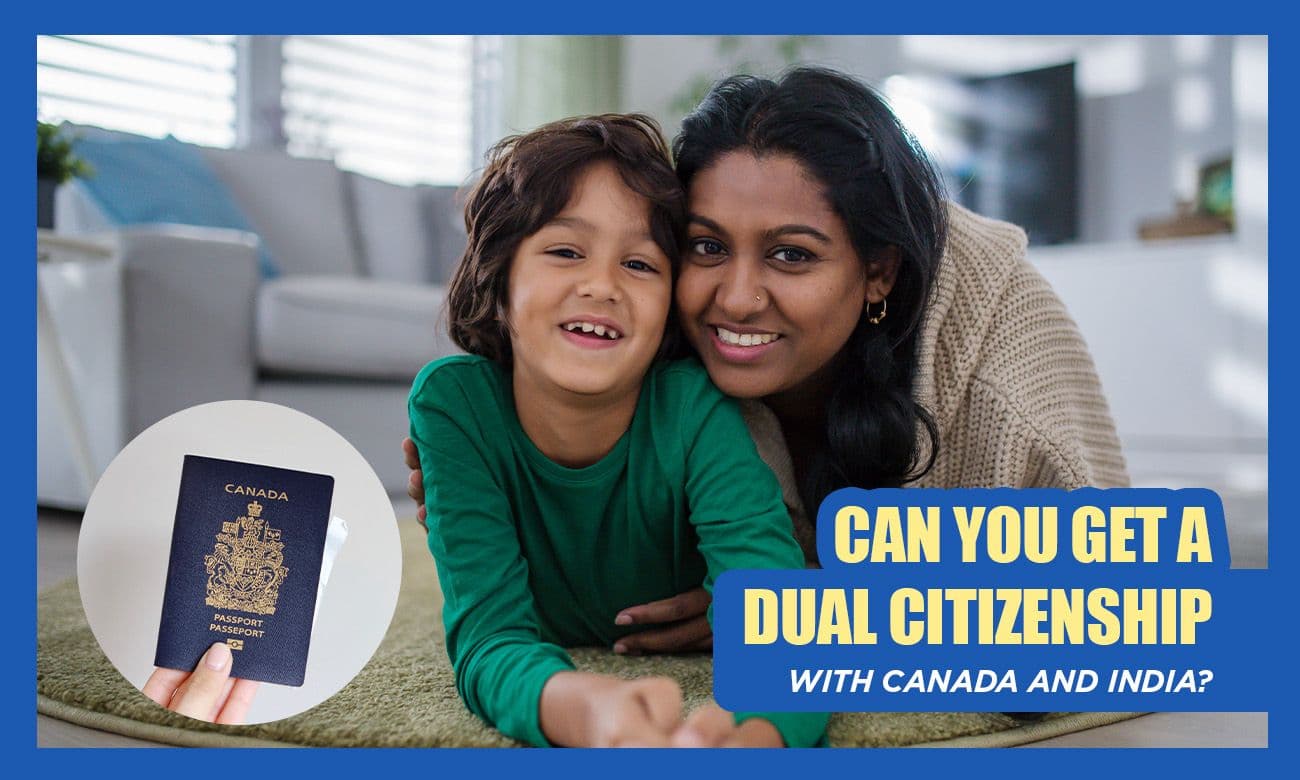
No, you cannot hold dual citizenship in India and Canada. India does not permit dual nationality under any circumstances. Anyone who acquires Canadian citizenship must surrender their Indian passport and formally renounce Indian nationality.
Canada, however, allows multiple citizenships, so becoming Indian would not affect your Canadian status if India permitted it (which it does not).
The practical alternative is the Overseas Citizen of India (OCI) program, which grants a lifelong visa with residence and work rights but does not confer full citizenship.
In this article, we'll further explore:
- Why Canada allows dual citizenship but India does not
- How OCI reissuance actually works under current rules
- Common questions Canadian residents ask about OCI
- What rights OCI provides and what it withholds
- Who qualifies for OCI (and who does not)
Does Canada Allow Dual Citizenship With India?
Yes. Canada permits citizens to hold multiple citizenships without restriction. If you are a Canadian citizen and acquire citizenship elsewhere, you remain a Canadian unless you formally renounce it. Canada does not force you to choose.
The practical implication is that Canadian citizens can pursue OCI status without risking their Canadian passport. Because OCI is not Indian citizenship (more on that below), holding OCI and Canadian citizenship together is entirely legal under both countries' laws.
However, Canadian citizens who previously held Indian citizenship are subject to a specific requirement. Before applying for OCI, you must obtain a surrender certificate confirming that you have formally renounced Indian citizenship. The High Commission of India handles surrender applications for Canadian residents.
Why Doesn't India Allow Dual Citizenship?
India's Constitution does not recognize dual nationality. Article 9 states that any Indian citizen who voluntarily acquires citizenship of another country automatically ceases to be an Indian citizen. No exceptions exist for specific countries, including Canada.
The policy reflects concerns about divided loyalties, security, and property rights that date back to India's independence. Unlike Canada, which treats multiple citizenships as a personal choice, India treats citizenship as exclusive. You are either Indian or you are not.
For Indian-Canadians, the consequence is clear: the moment you take the Canadian citizenship oath, your Indian citizenship ends by operation of law. You must then surrender your Indian passport to BLS International (India's visa and consular services partner in Canada) and obtain a surrender certificate. Traveling on an Indian passport after acquiring Canadian citizenship is illegal.
What Is the OCI Program, and What Does It Offer?
The Overseas Citizen of India program exists specifically because India does not allow dual citizenship. OCI provides a legal status for people of Indian origin living abroad, granting many (but not all) of the practical benefits that dual citizenship would offer.
OCI is not citizenship. The Indian government has repeatedly clarified that OCI cardholders cannot claim dual citizenship. Instead, OCI functions as a lifelong, multiple-entry visa combined with specific economic and residential rights.
| Feature | Indian Citizenship | OCI Card |
|---|---|---|
| Indian passport | Yes | No |
| Lifelong visa to India | N/A | Yes |
| Live and work in India | Yes | Yes |
| Voting rights | Yes | No |
| Hold public office | Yes | No |
| Buy agricultural land | Yes | No (restricted) |
| Parity with NRIs (economic, financial, educational) | N/A | Yes |
| Police registration required | No | No |
The OCI card allows you to live in India indefinitely, work without a separate employment visa, and access most economic opportunities available to Non-Resident Indians (NRIs). For many Canadian residents of Indian origin, OCI covers the practical needs that dual citizenship would address.
Travel Rights
OCI holders receive a multiple-entry, lifelong visa. You can enter India any time without applying for a tourist or business visa, and you can stay as long as you want without registering with local police. The visa does not expire, though the card itself requires updates in certain situations (as covered below).
Work Rights
OCI holders can work in India without obtaining a separate employment visa. You have parity with NRIs in economic and financial matters, which means you can open bank accounts, invest in Indian securities, and conduct business on similar terms.
Property Rights
OCI holders can purchase residential and commercial property in India. However, purchases of agricultural land, plantation property, and farmhouses remain restricted. If you inherit agricultural land, you may be required to dispose of it within a specified period.
Who Qualifies for OCI Status?
Eligibility depends on your connection to India by birth, descent, or marriage. The OCI services portal lists the official categories, but the main pathways for Canadian residents are:
Indian Origin
Former Indian citizens (including those who held Indian citizenship after January 26, 1950) qualify, as do their children, grandchildren, and great-grandchildren. You must be able to document the Indian origin through birth certificates, passports, or other official records.
Spouse Eligibility
Spouses of Indian citizens or OCI cardholders can apply, but only after two years of continuous marriage. The marriage must be registered and subsisting at the time of application. Foreign spouses who divorce an Indian citizen or OCI holder lose eligibility.
Minor Children
Minor children of OCI cardholders or Indian citizens qualify. Children born in Canada to at least one Indian-origin parent typically meet the eligibility criteria, though you must provide documentation of the parent's Indian connection.
Ancestry Exclusions
Applicants whose parents, grandparents, or great-grandparents held citizenship of Pakistan, Bangladesh, or certain other countries are not eligible for OCI. Indian consular guidance specifies the complete exclusion list. If any ancestor in the relevant lineage held Pakistani or Bangladeshi citizenship, OCI is not available regardless of your current nationality.
What Does OCI Not Give You?
OCI falls short of full citizenship in several important ways.
No Indian Passport
You travel to India on your Canadian passport, using your OCI card as your visa. When entering other countries, you present your Canadian travel document, not any Indian credentials.
No Voting Rights
You cannot vote in Indian elections at any level, from local panchayat elections to national parliamentary contests. Political participation is reserved for Indian citizens.
No Constitutional Offices
You cannot serve as President, Vice President, Supreme Court judge, or in various other government positions that require Indian citizenship.
No Agricultural Land Purchases
Restrictions on farmland, plantations, and farmhouses apply to OCI holders just as they apply to other foreign nationals.
How Do OCI Reissuance and Updates Work?
OCI rules around reissuance have changed in recent years, and many online guides contain outdated information. The current system is simpler than it used to be.
Online Updates
When you receive a new passport, you no longer need to physically reissue your OCI card in most cases. Instead, you upload your new passport details and a recent photograph through the OCI services portal. The update electronically links your existing OCI card to your new passport.
Mandatory Reissuance
Physical reissuance is required only in specific situations. According to the Consulate General of India, San Francisco, mandatory reissuance applies when you receive your first new passport after turning 20. A second reissuance may be required after completing 50 years of age, depending on when your OCI was originally issued.
Spouse Reissuance
Foreign spouses of Indian citizens or OCI holders are subject to slightly different rules. Reissuance requirements depend on the duration of marriage and whether the marriage remains registered and subsisting. Check the current guidance from your nearest Indian mission before assuming your card remains valid.
The key point is that you do not need to reissue your OCI card every time you get a new passport. The older guidance requiring renewal at ages 20 and 50, and with each new passport, is no longer accurate.
What Questions Do Canadians Usually Ask About OCI?
The most common questions from Canadian residents fall into a few categories: children, travel, work, and long-term plans.
Children Born in Canada
Can a child born in Canada to Indian-origin parents get OCI? Yes, if at least one parent qualifies. The child need not have been born in India. You apply on the child's behalf using the minor child category, providing proof of the parent's Indian origin.
Returning to Canada
Do you need an Indian document to return to Canada from India? No. You travel on your Canadian passport in both directions. The OCI card is your Indian visa, but your Canadian passport is your travel document. Always carry both when traveling to India.
Working in India
Can OCI holders work in India without a separate visa? Yes. OCI provides work authorization equivalent to that enjoyed by NRIs. You do not need an employment visa, though specific regulated professions (medicine, law, journalism in restricted areas) may have additional licensing requirements.
Getting Indian Citizenship Back
Can you restore Indian citizenship after becoming a Canadian citizen? In principle, yes. Indian law allows former citizens to apply to reacquire Indian citizenship by renouncing their foreign citizenship. However, you would need to give up Canadian citizenship to do so, because India still does not allow dual nationality. Most Indian-Canadians find OCI sufficient and do not pursue this path.
How RemitBee Helps Indian-Canadians
If you hold OCI and support family in India, RemitBee offers fee-free transfers over $500 CAD with exchange rate margins of 0.3–0.5%. Transfers arrive within hours, and you can track delivery in real time. Whether you're sending money for family expenses, medical costs, or property maintenance, RemitBee costs less than traditional bank wires.
Send money to India with RemitBee
Frequently Asked Questions
Does India allow dual citizenship with Canada?
No. India does not permit dual citizenship with any country. Anyone who acquires Canadian citizenship automatically loses Indian citizenship under Article 9 of the Indian Constitution. The OCI program serves as an alternative, offering a lifelong visa and certain rights without conferring full citizenship.
Can I keep my Indian passport after becoming Canadian?
No. You must surrender your Indian passport after acquiring Canadian citizenship. Traveling on an Indian passport after becoming Canadian is illegal. You apply for a surrender certificate through BLS International, then apply for OCI using your Canadian passport.
Is OCI the same as dual citizenship?
No. OCI is a lifelong visa and residency status, not citizenship. OCI holders cannot vote, hold public office, or purchase agricultural land in India. The Indian government has clarified repeatedly that OCI does not constitute dual citizenship.
How long does OCI last?
OCI status is lifelong. The card itself does not expire, though you must update your passport details online when you receive a new passport. Physical reissuance is required only in specific situations — the first passport after age 20 and, potentially, after age 50.