
WASHINGTON — The U.S. trade deficit nearly doubled in November to $56.8 billion, the largest percentage increase since March 1992, as imports surged and exports declined despite President Donald Trump's tariff policies.
The deficit widened 94.6 percent from October, when it hit its lowest level since June 2009, according to Commerce Department data released Thursday. Economists polled by Reuters had forecast a deficit of $40.5 billion.
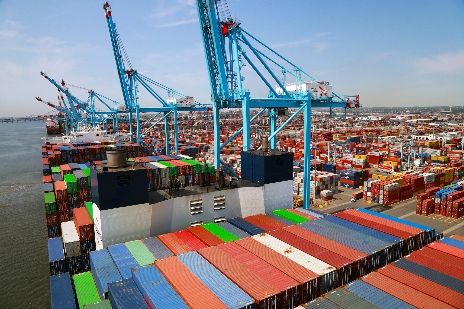
Imports surge, exports slide.
Imports rose 5 percent to $348.9 billion. Capital goods imports reached a record high, climbing $7.4 billion, driven by computers and semiconductors linked to artificial intelligence investment. Consumer goods imports increased $9.2 billion, lifted by pharmaceutical preparations.
Exports fell 3.6 percent to $292.1 billion. Goods exports dropped 5.6 percent to $185.6 billion, pulled down by a $6.1 billion decline in industrial supplies and materials, including non-monetary gold and crude oil.
The goods trade deficit widened 47.3 percent to $86.9 billion.
EU deficit swells, China gap narrows.
The goods deficit with the European Union jumped $8.2 billion to $14.5 billion in November. The deficit with China decreased by about $1 billion to $13.9 billion.
Through November, the goods trade deficit with China totalled $189 billion, less than the U.S. deficit with the European Union and only slightly larger than the deficit with Mexico.
Year-over-year through November, the total deficit stood at $839.5 billion, about 4 percent higher than the same period in 2024.
Tariff volatility continues
The data reflected volatility caused by Trump's tariff policies over the past year. Companies rushed goods into the country before tariffs took effect in early 2025, causing imports and the deficit to spike. After Trump announced global tariffs in April, shipments fell back.
Pharmaceuticals and semiconductors have seen import surges and declines as the president announced, imposed, and changed tariffs throughout the year.
The U.S. effective tariff rate has climbed to nearly 17 percent as of January, the highest level since 1935. A framework agreement between the U.S. and EU in August set the tariff rate at 15 percent on most European goods.
Growth estimates under pressure
The widening deficit could prompt economists to trim fourth-quarter growth estimates. Net imports are subtracted from GDP calculations, so October's narrow deficit had boosted projections.
The Atlanta Federal Reserve forecasts GDP increased at a 5.4 percent annualized rate in the fourth quarter. Estimates from major Wall Street banks, including Goldman Sachs, run below 3.0 percent.
Eugenio Aleman, chief economist at Raymond James, said the increase was "larger than expected" and would lower growth projections.
The report was delayed due to the 43-day U.S. government shutdown. December data will be released next month.
What does this mean for Canadian exports?
The data arrives as Canadian exporters face heightened uncertainty over U.S. trade policy. Trump has imposed 35 percent tariffs on Canadian goods, with separate levies on steel, aluminium, and lumber, leading to job losses in those sectors.
Nearly 80 percent of Canadian exports went to the United States last year. Prime Minister Mark Carney has been working to diversify trade relationships, including with China, prompting Trump to threaten 100 percent tariffs on Canada if it pursues such deals.
The widening U.S. deficit, driven partly by tariff-related volatility, underscores the unpredictable trade environment facing Canadian businesses dependent on American demand.


