Have you ever tried transferring money within Mexico and wondered what a CLABE number is? You're definitely not alone. The term can sound intimidating, but it's actually pretty straightforward once someone explains it properly.
A CLABE (Clave Bancaria Estandarizada) works like Mexico's version of a banking passport for your account. When you need to send money to someone in Mexico, you'll likely need their CLABE number to make the transfer happen. However, it's not the only way to move money around (which is good news if you're in a pinch).
What exactly is a CLABE number?
Rather than thinking of it like a social security number, picture the CLABE as a unique address system for bank accounts across Mexico. Each account gets its own 18-digit identifier that tells the banking system exactly where your money should go.
The Mexican Bank Association (ABM) and Banco de México created this system to prevent those nightmare scenarios where your transfer ends up in someone else's account. Nobody wants to explain to their family why the rent money went to a stranger in Guadalajara instead of their landlord in Mexico City.
Additionally, while CLABE remains the gold standard for transfers between different banks, Mexico's SPEI system also accepts 16-digit debit card numbers or 10-digit mobile phone numbers linked to accounts. This flexibility means you have backup options when you need them most.
How do you decode a CLABE number?
Breaking down the structure helps you understand what you're looking at (and spot potential errors before they cost you).
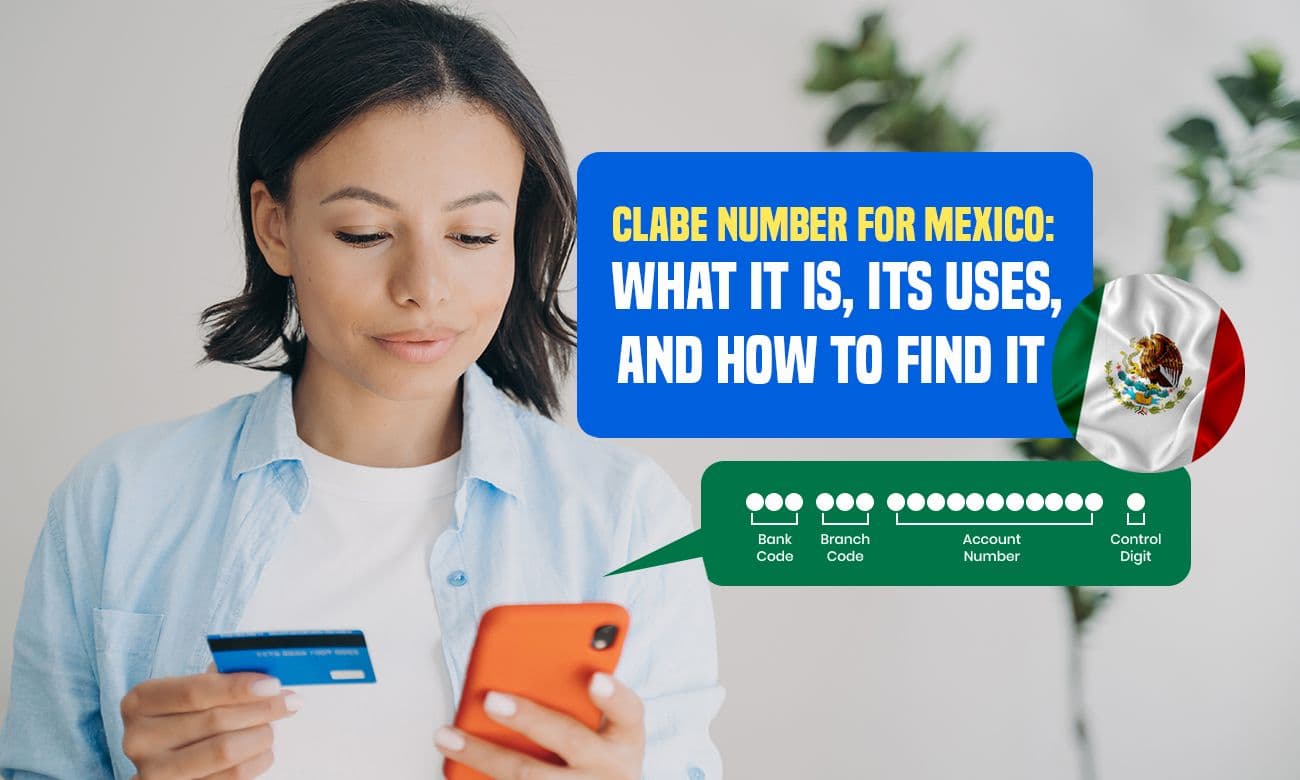
Every CLABE follows the same 18-digit pattern: AAABBBCCCCCCCCCCCD
Example: 002665000000000001
- 002 (Bank identifier): Shows you which bank holds the account
- 665 (Geographic code): Identifies the city or region where the account was registered
- 00000000000 (Individual account): The unique 11-digit account number within that specific bank
- 1 (Verification digit): Acts like a security check to ensure the format is correct
You'll encounter certain bank codes more frequently than others:
- 002 = Banamex (Citibanamex)
- 012 = BBVA México
- 014 = Santander
- 021 = HSBC
- 030 = Banco del Bajío
- 072 = Banorte
The geographic code (those middle three digits) doesn't point to a specific branch office. Instead, it represents the broader area where someone opened their account.
When do you actually need a CLABE number?
Mexican banks require CLABE numbers primarily for:
- Moving money between different banks (through the SPEI system)
- Setting up direct deposit for your salary
- Arranging automatic bill payments
- Processing business-to-business transactions
For international transfers:
- Traditional bank transfers: Require both the CLABE number and the bank's SWIFT/BIC code (plus recipient details)
- Specialized money transfer services: Sometimes only need the CLABE since they convert everything to local processing
CLABE numbers aren't needed for every transaction. You won’t need one for:
- Credit card purchases
- Transfers within the same bank
- Most online shopping
Where can you find your CLABE number?
Your CLABE number appears in several places:
- Online banking dashboard
- Mobile banking apps
- Monthly bank statements and official letters
- By calling your bank directly
If you’re having trouble locating it, your bank’s customer service can confirm it instantly. For verification, rely on official sources like your bank or Banco de México — not third-party websites.
Do you need a CLABE for international transfers?
- Most banks: Require both CLABE and SWIFT/BIC codes
- Some remittance services: Only need the CLABE because they handle routing internally
Watch out for poor exchange rates. Many banks hide profits in their FX markups rather than fees, meaning your recipient could receive less. Choose services that offer real market rates with transparent fees.
What should you know about CLABE verification?
Mexico’s SPEI system credits funds based on the account identifier (CLABE, card, or phone number) not the recipient’s name.
That means:
- A correct CLABE with the wrong name can still send money to the unintended recipient
- Always double-check the CLABE before sending
- Mistyped CLABEs with invalid formats are usually rejected by the bank
What about common questions people ask?
Why do some transfers need both SWIFT codes and CLABE numbers?
SWIFT directs the money to the right bank (like a postal code), while CLABE directs it to the exact account (like a street address).
Is sharing your CLABE number risky?
No. It’s like sharing your mailing address — it lets people send you money but doesn’t give them withdrawal access.
How fast are CLABE transfers?
SPEI transfers complete within 30 seconds, 24/7, including weekends and holidays. Some banks may add brief holds for new recipients.
The bottom line
CLABE numbers are the most reliable method for interbank transfers in Mexico. They often work alongside SWIFT /BIC codes for international transactions, but you won’t need them for every financial activity.
- For domestic transfers, alternatives like debit card or phone numbers also work through SPEI.
- For international transfers, CLABE ensures smooth, accurate delivery.
When in doubt, always provide your CLABE it guarantees your money reaches the right account.