Your credit report determines whether you'll pay 6% or 12% on your next loan. The difference results into thousands of dollars over time. Both Equifax and TransUnion maintain separate files on your credit history — and checking them costs nothing (seriously, free). Here's what you need to know:
- What's actually inside your report (beyond just your score)
- How to spot and fix errors before they cost you money
- Exact steps to access both reports at no charge
What's a credit report?
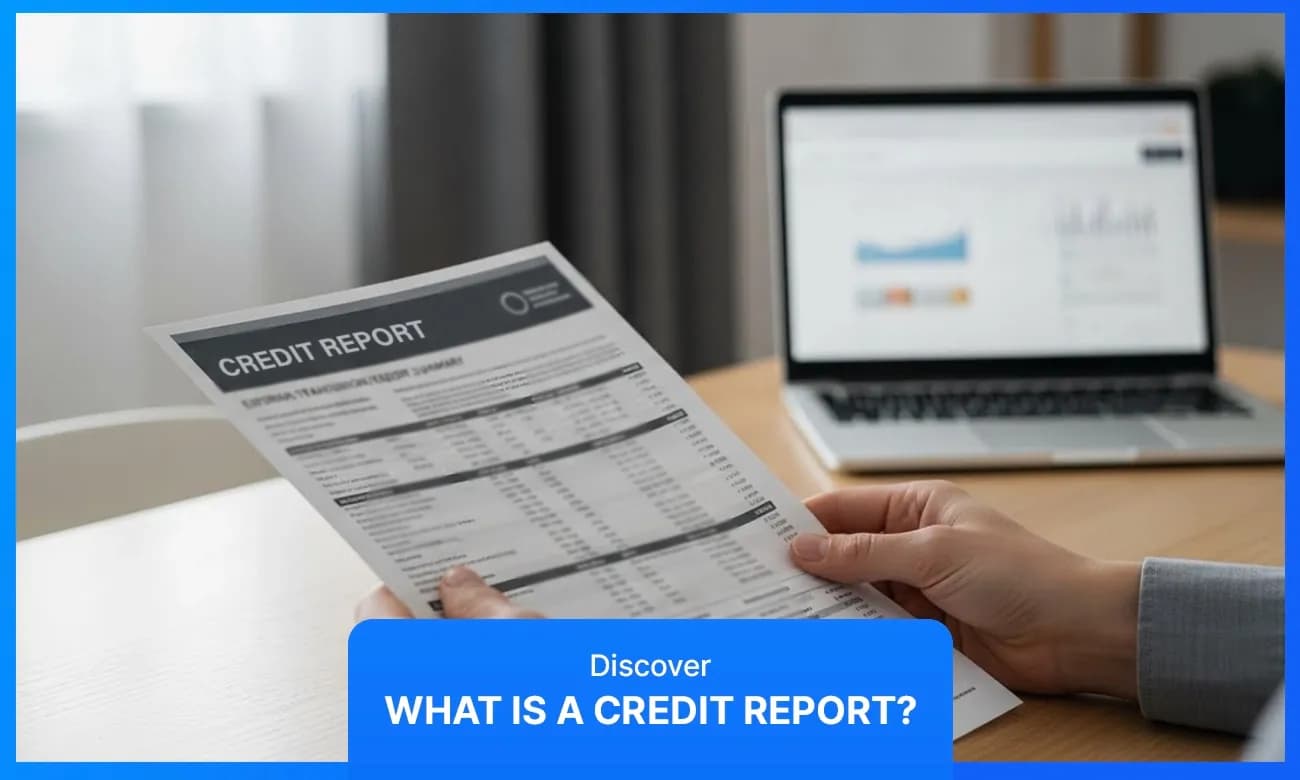
Think of your credit report as a financial résumé. Instead of listing jobs, it tracks every credit account you've opened, every payment you've made (or missed), and your overall debt levels over time.
The report feeds into your credit score — that three-digit number (300–900 in Canada) that lenders use to size you up. According to the Financial Consumer Agency of Canada, your report strongly influences loan approvals and interest rates because it reveals how you handle debt, not just if you have it.
Canada has two major credit bureaus:
- Equifax Canada
- TransUnion Canada
Lenders typically report your activity to one or both bureaus about every 30 days. Since the bureaus collect different information (not all lenders report to both), your reports can vary slightly between them. This matters because one bureau might show an error the other doesn't.
What's inside your report?
Your credit report contains four main sections. Each one tells part of your financial story.
Personal information
Basic identifying details confirm who you are — full name, current and previous addresses, date of birth, Social Insurance Number (if you've shared it with creditors), and employment information. Errors here can mix your file with someone else's. Yikes.
Credit history
The heart of your report shows every credit account you have or had. Each entry includes account type (credit card, car loan, line of credit, mortgage), date opened, credit limit or loan amount, current balance, and payment history.
Payment history gets rated with codes. R1 means paid within 30 days — the best rating. Higher numbers indicate late payments (R2 is 30-60 days late, R3 is 60-90 days, and so on). One late payment code can drop your score by 50+ points.
Inquiries
Every time someone checks your credit, it appears here. Inquiries fall into two categories.
Soft inquiries don't affect your score because you didn't initiate them — checking your own report, pre-approved offers, existing creditor reviews.
Hard inquiries may temporarily lower your score by a few points. These happen when you formally apply for new credit. How much damage? Usually 5-10 points per inquiry (gone after two years).
Public records
Serious financial events appear in this section — bankruptcies, consumer proposals, court judgments, accounts sent to collection agencies. Bankruptcy stays on your report for six to seven years after discharge. Can't be removed early, even if you've rebuilt perfectly since.
How to access your free credit report?
Both Equifax and TransUnion must provide you with free access. You have four options — online, by mail, by phone, or in person.
Equifax Canada
Online
Create a free myEquifax account. Once logged in, view and download your credit report as a PDF (arrives instantly).
By mail
Download and complete the Equifax Credit Report Request Form. Include photocopies of two pieces of ID — one government-issued (driver's license works), one confirming your address (utility bill or bank statement). Mail to:
Equifax Canada National Consumer Relations P.O. Box 190, Station Jean-Talon Montreal, QC H1S 2Z2
According to Equifax, reports typically arrive within 5-10 business days after identity validation.
By phone
Call 1-800-465-7166. Be ready to verify your identity by answering personal questions (previous addresses, loan amounts, that sort of thing).
In person
Visit one of Equifax's offices where available, with two forms of ID. Not every province has an office (most people end up using online or mail).
TransUnion Canada
Online
The Consumer Disclosure on TransUnion's website is your credit report. Sign up or log in through their portal to view and download it. Reports update monthly (so checking daily won't show changes).
By mail
Download and fill out the TransUnion Consumer Request form. Include photocopies of two pieces of ID — one primary (passport works), one secondary confirming your address. Mail to:
TransUnion Canada Consumer Relations P.O. Box 338, LCD1 Hamilton, ON L8L 7W2
By phone
Call 1-800-663-9980 and follow the prompts to request your Consumer Disclosure. You'll need to verify your identity with personal and financial questions.
In person
TransUnion has offices in some provinces (not all). If one is available near you, bring two pieces of ID and request your Consumer Disclosure face-to-face.
Smart checking habits
We call this the Alternating-Bureau approach: order from one bureau, wait six months, order from the other. The FCAC recommends this method because it helps you spot problems sooner (without overwhelming yourself with redundant checks).
Keep documentation ready — two valid IDs showing your name, address, and signature for mail or in-person requests. Save your report when you download it because you'll want a reference point if you dispute errors later.
Review thoroughly. Check every section for errors or unfamiliar activity — wrong addresses, accounts you don't recognize, incorrect payment histories. What percentage of reports contain errors? Studies suggest 20-25% have some kind of mistake (not all material, but some definitely are).
Watch out for "free" offers. Some "free credit monitoring" services quietly enroll you in paid subscriptions after trial periods. Nope. Stick with the genuinely free reports from Equifax and TransUnion directly.
What about errors?
Mistakes on your credit report — an incorrect late payment, an account you never opened — can lower your score and cost you money (higher interest rates, denied applications).
If you spot an error, contact the credit bureau showing the mistake because they maintain the file. The bureau will investigate with the lender and update your report if the error is confirmed. Most investigations wrap up within 30 days — longer for complex cases involving identity theft.
If the dispute isn't resolved in your favor (and you still disagree), you can request a consumer statement. This is typically up to 100 words explaining your side, which gets attached to your report. Won't fix the issue, but provides context to future lenders reviewing your file.
What you need to remember
Your credit report tracks your history with two bureaus — Equifax and TransUnion — and each may hold slightly different information depending on which lenders report to them. Never assume one report tells the complete story.
Check your reports at least once a year (ideally every six months by alternating between bureaus) because errors happen more often than you'd think. Catching them early protects your financial opportunities.
If you spot an inaccuracy, dispute it immediately. The process takes about 30 days, but the impact on your credit score — and your wallet — makes it worth the effort. A single corrected late payment can boost your score by 50+ points.
Don't wait until you're applying for your next loan to discover a problem. Request your free credit report today and take control of your financial story.