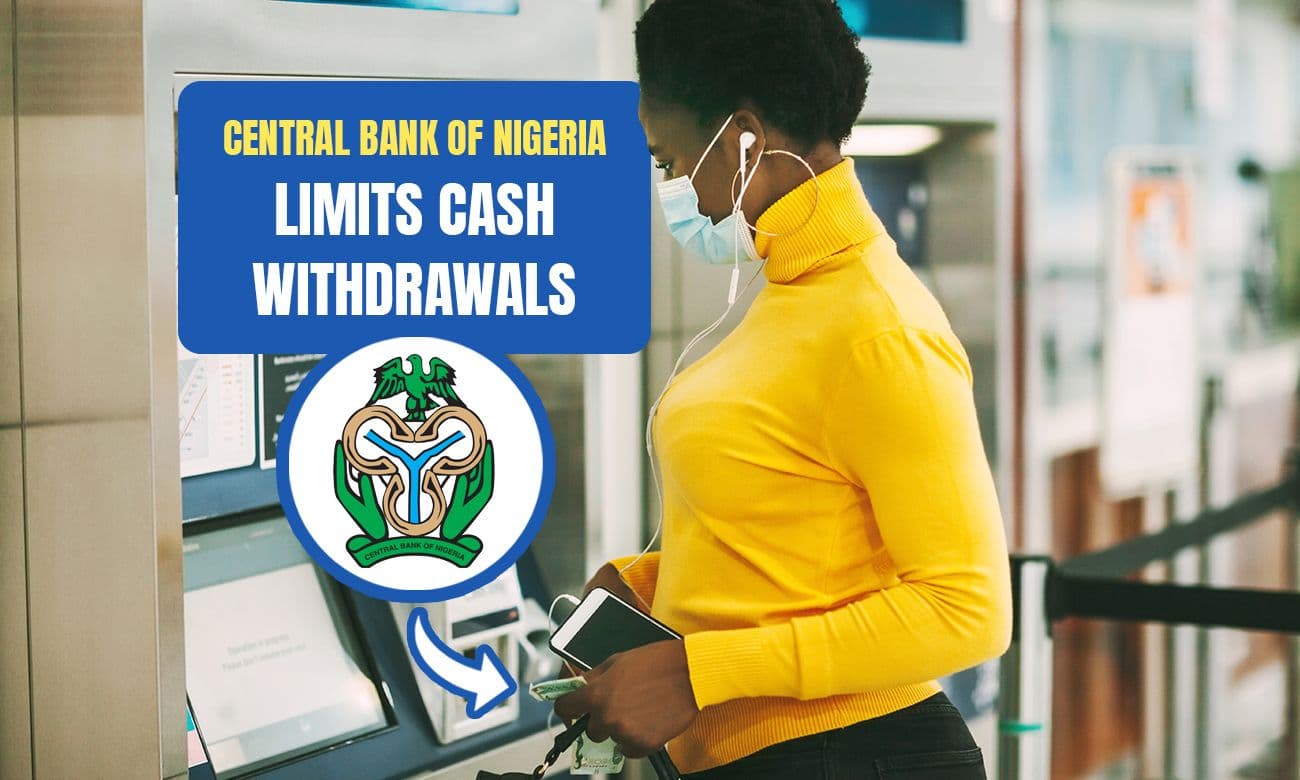
The Central Bank of Nigeria (CBN) has limited the weekly over-the-counter cash withdrawals to 100,000 for individuals and 500,000 nairas for corporations. A service fee of 5% for individuals and 10% for businesses will be charged for withdrawing amounts above those limits. Aside from the extra fee, state-issued documents will be required, a “notarized customer declaration of the purpose for the cash withdrawal” and a written authorization by the CEO of the bank approving the transaction.
When this policy is implemented on January 9, 2023, ATMs in Nigeria won’t dispense the country’s high denominations of 1,000 and 500 nairas. AMTS and other point-of-sale terminals will be limited to 20,000 nairas per day.
Limiting Cash Withdrawals in Nigeria: A Way to Keep Up with Digital Banking
The Governor of the CBN, Godwin Emefiele, said that this recently-introduced policy on cash withdrawal limit is needed to strengthen the nation’s economy. Rather than withdrawing cash, this new policy is aimed to encourage customers to “use alternative channels (internet banking, mobile banking apps, USSD, cards/POS, eNaira, etc.) to conduct their banking transactions.” Policymakers also see that this monetary initiative will encourage people into the banking system, curb currency hoarding, illicit flows, and inflation.
In 2012, Nigeria established its “cash-less” policy to shift away from physical cash and make its payment system more efficient and affordable with reduced costs. Banking services and improve the effectiveness of the country’s monetary policy. The eNaira was launched on October 25, 2021. However, the adoption of this digital currency has been low ever since, and the CBN has struggled to convince Nigerians to use the said Central Bank Digital Currency (CBDC).
What Experts Think
Despite what the CBN claims, experts are worried about the new policy. Digital payments are often unreliable in the country, so pushing people and businesses to use them may hurt their daily transactions. The economic analyst Kalu Aja comments: “The policy is intended to cause discomfort, to move you from cash to cashless because they (the central bank) have said they want to make it uncomfortable and expensive for you to hold cash.”
Nigeria is a country where the majority of people work in the informal sector, such as farming, street and market trade, and public transportation. The country’s economy relies on this sector, and cash is often preferred for transactions because many do not have bank accounts. In fact, only 45% of adults have accounts with regulated financial institutions in Nigeria. If one does not have a bank account, point-of-sale terminals emerged as one of Nigeria's fastest-growing areas of financial inclusion.
With this in mind, Tunde Ajileye, a partner at a Lagos-based SBM Intelligence firm, sees that this new policy by the CBN is a direct attack on agency banking services. He said, “it [the policy limiting withdrawals] is not going to drive people to start to try doing electronic transactions. On the contrary, it is going to move people away from the financial institutions.”
Nigerians Have No Need to Fear, Said Nigerian President, Muhammadu Buhari
Emefiele said that after meeting behind closed doors with President Muhammadu Buhari, the president said, "we should carry on our work, no need to fear, no need to bother about anybody.” He appealed to Nigerians to see the new policy the way they presented it.
He adds that they will not be rigid in implementing the new policy and will be tweaking some amount to avoid imposing hardship on Nigerians. The cash withdrawal limits are subject to review, and the deadline of January 31, 2022, to deposit all old notes remains sacrosanct.
The Bottomline
How the new cash withdrawal limit will affect Nigerians has yet to be determined. Once it is implemented, that’s the only time people can know whether this policy is for the economy’s improvement or not.
If you are working in Canada and sending money to Nigeria, choose RemitBee’s money transfer service. You can send money for free with us when you send over 500 CAD! That’s not all. We also give the best currency exchange rates so that you can get the most out of your money. Sign up now and start sending money with us