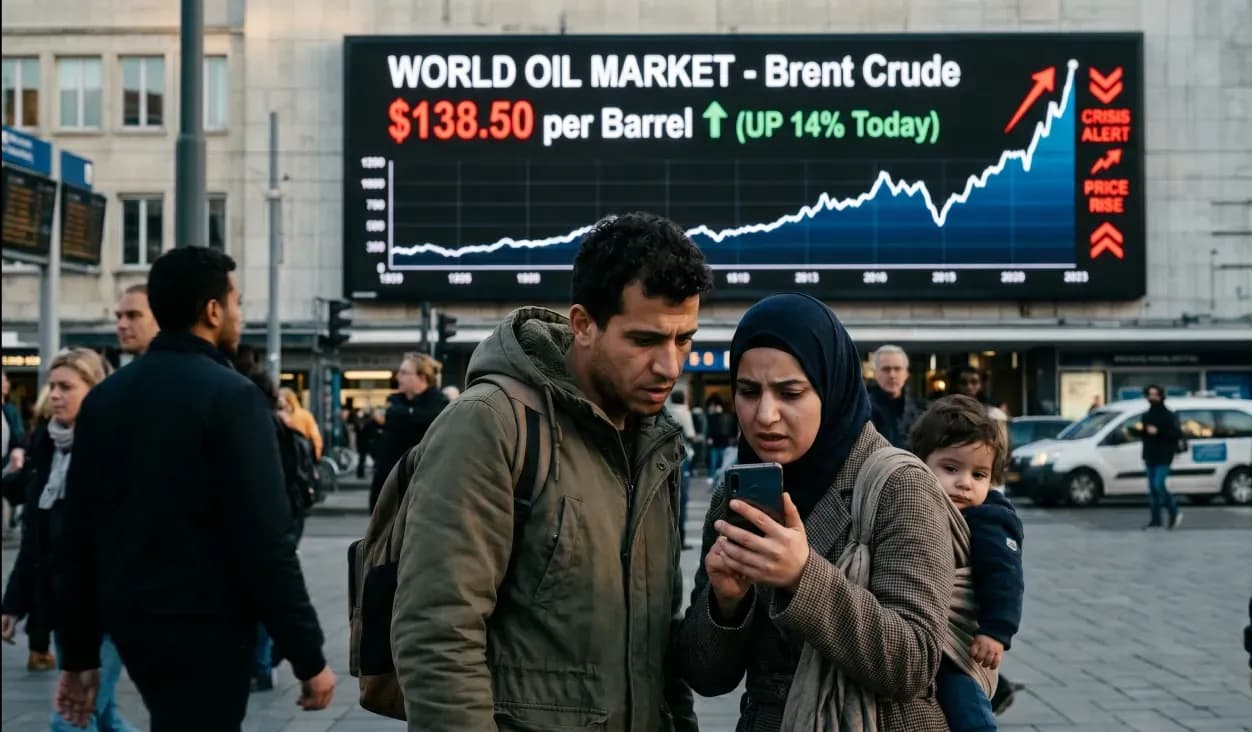
The war in Iran may occur in the Middle East, but its effects are felt worldwide. Beyond the human toll, this war disrupted economies. The prices of crude oil increased by 40% to 50%, with prices jumping from $65USD to $95USD per barrel due to the shipping disruptions through the Strait of Hormuz. Following the April 8 ceasefire between the United States and Iran, Brent crude oil prices have started to retreat, trading near $94USD a barrel.
When oil prices move, everything is affected. As one of the most influential commodities in the world economy, oil affects every stage of production and transportation. When oil prices rise:
- Shipping costs increase
- Food prices rise
- Manufacturing inputs become more expensive
- Any form of travel and public transportation costs increase
Is Canada Unaffected?
Canada is the world's fourth-largest oil producer and fifth-largest natural gas producer. In 2025, the country's average natural gas production amounted to about 19.0 billion cubic feet per day. Meanwhile, in the same year, Canada's average oil production was 5.9 million barrels per day.
Despite being a major oil producer, oil and gasoline prices in Canada have risen significantly during the 2026 Iran war. Despite domestic production, Canadian oil prices rise due to:
- Global Market Pricing: Canada sells its oil on the global market. If global demand rises, Canadian companies won't sell their oil domestically at a lower price.
- Supply Disruptions: Disruptions in the Middle East, such as severe congestion and restricted traffic in the Hormuz Strait, caused global panic and price increases.
- Pipeline Constraints: Limited and expensive transportation capacity means some Canadian regions can't easily access domestic supplies, making them vulnerable to imported price shocks.
- Currency Correlation: The Canadian Dollar (CAD) is often tied to oil prices, so when oil goes up, the exchange rate can shift, affecting the cost of imported goods.
The disruption also increased global interest in Canadian liquefied natural gas (LNG) exports, especially in Asia, because shipments from Canada's Pacific coast avoid Middle Eastern shipping chokepoints such as the Strait of Hormuz.
While higher oil prices strengthen Canada's export revenues, production and pipeline capacity limits prevent a rapid increase in supply. The Iran war may be cooling, but the economic aftershocks are creating a unique financial squeeze for everyone, especially those who are trying to support families back home while building a life in Canada. Oil shocks influence:
- Inflation
- Exchange rates
- Interest-rate decisions
- Grocery prices
- Transportation costs
- The purchasing power of remittances overseas
Understanding how these forces interact is essential for managing cross-border household finances in 2026.
The "Double-Front" Financial Pressure
Rising gas prices are a barrier to an immigrant's economic mobility. They experience a double blow: going to work costs more, and the dollars they earn don't go far.
The "Rocket and Feather" Gas Shock
Between March and April 2026, Canada has seen the fastest hump in gas prices. Even though there is a ceasefire, prices at the gas stations are not dropping nearly as fast, which economists dub the "Rocket and Feather" effect.
- The Rocket: When oil prices go up in the news, gas stations raise their prices instantly.
- The Feather: When oil prices go down, gas stations lower their prices slowly, like a feather drifting to the ground.
- The Result: Consumers are still paying "war prices" at the pump even when the news says the war is pausing.
The Commuter Penalty
New Canadians face a "geography trap." To find affordable housing, many choose to move to "arrival cities" such as Brampton, ON, or Surrey, BC. The problem is that these places are designed for cars, not subways, so getting around requires driving. This means that the money saved on housing is now spent on gas rather than allocated to other necessities and remittances.
Moreover, many immigrants in Canada work in jobs such as long-haul trucking, Uber or Lyft driving, or home care nursing. These are not office jobs where one can work from home. Instead, to get paid, they need to drive. And to drive, they need to spend on expensive petroleum products.
The "Hidden Pay Cut"
In late March, some cities in Canada saw gasoline prices approach or exceed $2CAD per liter. For people who drive for a living, this increase is a disaster. Imagine a full-time ride-share driver now spending several hundred dollars more per month just on gas. They are taking home 20% less money than they did in February, even if they worked the same hours.
The Grocery and Fertilizer Ripple Effect
The conflict in the Middle East did not just disrupt oil production, but also the global nitrogen cycle. The Strait of Hormuz is also a major transit point for urea and anhydrous ammonia, which are important ingredients in modern fertilizer. Because there was less fertilizer available globally, the World Bank's latest Pink Sheet report showed that the fertilizer index registered a monthly increase of 26.2%.
The Canadian Farmers' Problems
Canadian farmers are currently hit from two sides at once. The first problem is that they use huge amounts of diesel to run their machinery. The second problem is that they need expensive fertilizers to grow wheat, corn, and other produce.
The entire burden does not fall on farmers. When their costs go up, so does the grocery bill. Apart from the skyrocketing prices of fuel for food transportation and fertilizer for food production, plastics and other chemicals derived from petroleum also contribute to the increase in the cost of producing food.
Dietary Displacement: Choosing Between Two "Homes"
For many immigrants, sending money home is a non-negotiable responsibility. When the cost of living in Canada spikes, they continue sending money. Often, they change what and how much they eat to have enough funds to send back home. Some immigrant families stop buying expensive and healthy items like fresh fruits and vegetables and high-quality rice. Instead, they buy cheaper, highly processed filler foods like canned goods, white bread, and pasta.
This adjustment is more than just about nutrition; it's also about one's identity. By not being able to cook a traditional meal with the right ingredients, an immigrant can be more homesick, creating a "quiet crisis" of mental and physical health.
The Remittance Crisis: "Sending Less to Save More"
For immigrants and their families, the oil crisis brought about by the war can be considered a thief. The crisis makes the gap between the two homes, the one in Canada and the other in the home country, wider because they can no longer afford to bridge it with the same level of financial support. Some immigrants are sending less to save more, not out of selfishness, but out of a desperate need to survive the higher cost of living in Canada. Workers may be working more overtime at present, but they are sending less because Canada's high bills eat the extra pay before it hits their bank account.
The Good Exchange Rate May Be a Lie
When you check the current exchange rate, you will see that the Canadian Dollar, even the US Dollar, looks strong. Perhaps you see that the $100CAD you will send will get you more Philippine pesos or Indian rupees than last year, and you may be tempted to increase the amount you send monthly to your family to take advantage of the rates. Based on RemitBee's data, immigrants in Canada sent around 1.9% more money to the Philippines and India in March 2026 than in January of the same year. This may look like a win, but an immigrant's family back home in the Philippines or India is losing. How?
Let's say the $100CAD you sent the previous year bought 10 bags of rice for your family. In 2026, you sent the same amount ($100CAD), and it gives them more local cash because the exchange rate is better. However, because your home country imports expensive oil, the price of rice soared. Now, the $100CAD you sent can only buy 8.4 bags of rice. So even if the exchange rate looks better, an immigrant's family back home actually has a purchasing power of around 15%.
Emergency Hoarding Due to Fear
The ceasefire last April 8 is great news. However, no one knows how long it will last. If the peace talks fail and oil prices continue to increase, the economy may crash, and people might lose their jobs. Because of fear and uncertainty, some immigrants are keeping cash in their Canadian savings accounts rather than sending every spare dollar back home.
Administrative and Institutional Hurdles
Apart from external shocks, immigrants also face hurdles in Canada.
The April 30th Fee Hike
The Canadian government adjusts immigration fees every two years to keep up with the inflation. In 2026, this adjustment will take effect on April 30.
| Fee Type | New Cost (CAD) | Previous Cost (CAD) |
|---|---|---|
| Right of Permanent Residence Fee (RPRF) | $600 | $575 |
| Federal High Skilled, PNP, and Economic Pilots | $990 | $950 |
| Business Category (Federal/Quebec) | $1,895 | $1,810 |
| Family Reunification | $570 | $545 |
| Protected Persons / Humanitarian | $660 | $635 |
| Permit Holders | $390 | $375 |
| Adult Citizenship Fee | $123 (effective since March 31, 2026) | — |
If a couple is applying for permanent residency in April, the combined increase in fees, including RPRF, can easily exceed $300 to $400 compared to March. This is the equivalent of around two months of gas money for a commuter, gone instantly to paperwork.
The Dilemma at Work
High energy prices also affect employers and business owners. When oil is expensive, it costs more to run a factory, heat a warehouse, or fuel a delivery fleet. When costs are up, companies look for ways to cut variable costs, which usually means hours and shifts.
Many newcomers to Canada are also newcomers to the company they are currently working for. Because they often have the least seniority, they are the first to have their hours cut when the business slows down. Worse, under the Last In, First Out rule, if a factory needs to cut 10% of its staff because of high operating costs, the newest hires, who are often immigrants, are the first to go.
The Digital Shift
Traditional banking systems are facing a two-sided crisis: rising default risks from consumers struggling with high gas prices and extreme regulatory scrutiny due to the war. Since banks are terrified of accidentally processing a transaction that violates wartime sanctions, they have added layers of manual compliance checks to international wires. This has created a bottleneck, delaying international wire processing timelines. Some banks also introduced risk-adjustment fees, essentially a conflict surcharge to cover the extra costs of these security checks.
Thankfully, fintech companies offer immigrants alternatives when it comes to sending money back home. As a workaround, immigrants are exploring stablecoin-based transfers as alternative cross-border payment tools and as a means of accessing dollars in emerging markets.
Practical Strategies for Immigrants Sending Money Home in 2026
Energy-market volatility linked to the Iran war is expected to continue influencing exchange rates, inflation, and interest rate decisions in 2026. Immigrants should adopt a proactive approach to preserve the real value of their remittances under these uncertain economic conditions. Here are practical approaches that can make transfers more efficient and financially resilient.
Monitor exchange-rate windows carefully
Oil price increases often strengthen the CAD, as Canada is a major energy exporter. When demand for Canadian exports increases, the value of CAD also increases relative to many emerging-market currencies. Sending money during this window can increase the household purchasing power overseas without the need to increase the transfer amount.
Send transfers in stages rather than a single large payment
Exchange rates can shift quickly within days due to market uncertainty. Thus, splitting transfers into smaller amounts spreads exchange-rate risk across multiple conversion points, improving the chances of getting the best rates at least once during the month.
Plan early for rising food and transportation costs
Plan by adjusting your monthly budgets early, before inflation peaks, so that the amount committed for remittance remains stable even if the cost of living in Canada increases later in 2026.
Watch the Central Bank's announcements closely
When oil prices rise sharply, central banks often delay interest-rate cuts to prevent inflation from spreading across the economy. In Canada, policy signals from the Bank of Canada are especially important because they influence both borrowing costs and currency strength. Monitoring policy updates helps migrants anticipate when exchange-rate conditions may improve or when household budgets may tighten.
Coordinate with family members about timing needs
In many oil-importing economies, fuel and electricity prices increase faster than wages. This means relatives abroad may experience inflation earlier than migrants working in Canada. By maintaining communication about the increase in commodities and expenses, immigrants can adjust their remittance schedule more effectively.
Build a small "energy shock buffer" into monthly budgets
To be more financially stable during uncertain times, setting aside even a modest monthly buffer can help households stay afloat despite fuel price increases, grocery inflation, and interest-rate adjustments without reducing remittance commitments.
Send money using RemitBee
RemitBee is trusted for sending money from Canada. RemitBee offers competitive exchange rates and low transaction fees. By sending over 500 CAD in a single transaction, the transfer fee is waived, so immigrants can maximize every dollar they send back to their families.
Conclusion
Oil markets respond quickly to geopolitical conflict, but their consequences unfold slowly inside household budgets. The recent escalation involving Iran showed how disruptions thousands of kilometers away can reshape everyday financial decisions for immigrants living in Canada and supporting families abroad.
For immigrants sending money home, the impact is especially complex. Rising fuel costs reduce disposable income in Canada, while inflation in oil-importing countries weakens the purchasing power of the funds received overseas. At the same time, exchange-rate movements linked to higher Canadian energy exports can temporarily increase the value of remittances, creating both risks and opportunities within the same economic cycle.
Canada's position as one of the world's largest oil producers provides partial protection from global energy shocks, but it does not isolate households from them. Because oil is priced globally, domestic fuel costs still respond quickly to international disruptions, while pipeline limits and regional supply constraints continue to shape local price differences across the country.
Understanding how energy markets influence inflation, currency strength, employment conditions, and transfer timing is now an essential part of cross-border financial planning. For many newcomers, sending money home is not simply a routine monthly transaction; it is a long-term commitment that must adapt to global uncertainty.
In 2026, the lesson is clear: when oil prices rise, remittance strategy matters just as much as remittance amount. Thoughtful timing, flexible budgeting, and awareness of policy signals can help immigrants protect both their financial stability in Canada and the well-being of the families who depend on them abroad.