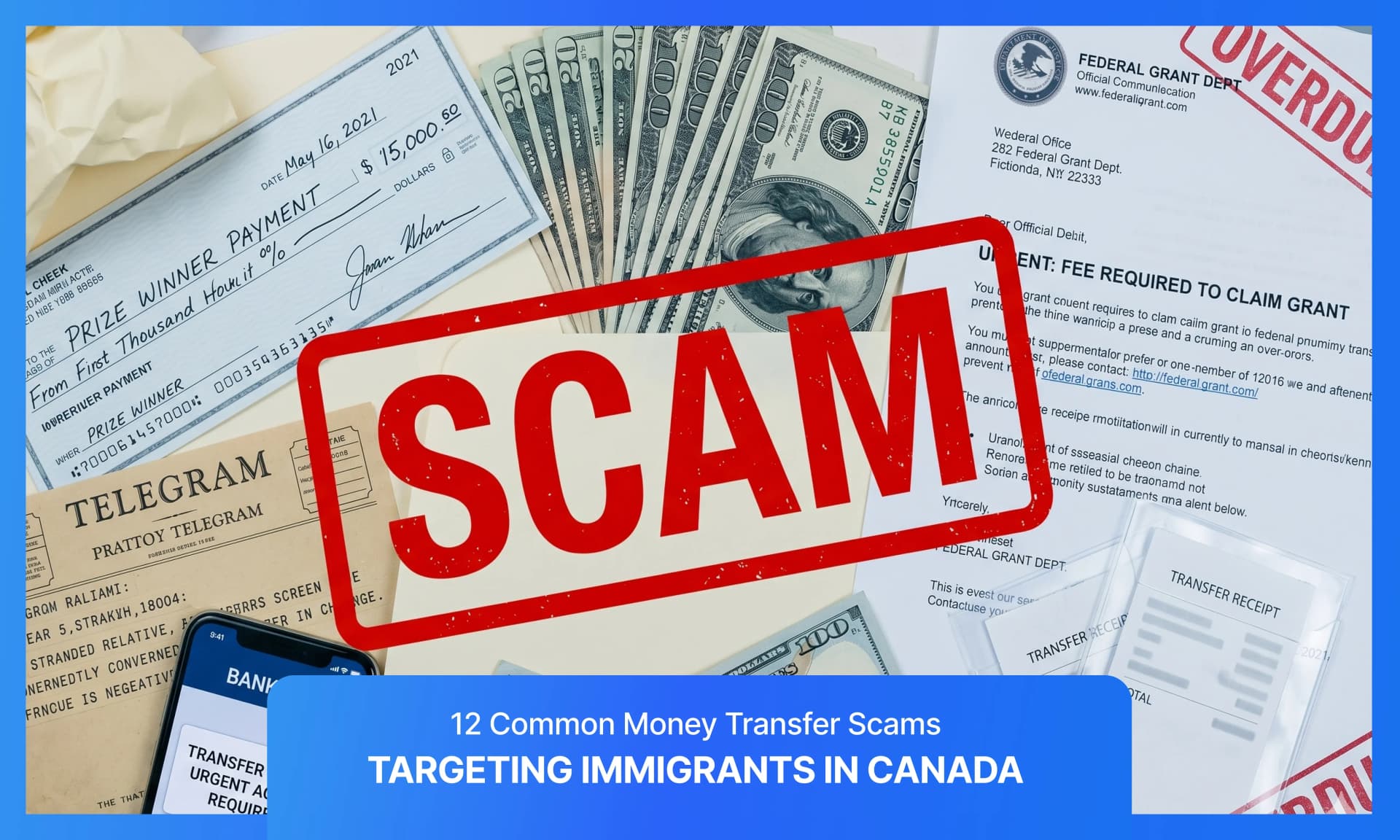
If you're an immigrant in Canada, scammers are looking for you. Not because you're careless, but because you're new to the system, and the situations are designed to overwhelm immigrants like you.
Did you know? A survey reveals 53% of new Canadian families have already been targeted by financial fraud. And only 22% feel confident they'd know what to do if a scam actually happened.
90-95% of financial fraud cases never get reported, usually because people feel embarrassed, pressured, or unsure where to go.
That financial literacy gap in Canadian immigrants is where scams work.
Impersonation scams (where someone pretends to be from immigration, the tax office, a bank, etc.) are now one of the fastest-growing types. They exploit:
- Unfamiliar systems
- Language barriers
- Time-zone pressure from family abroad
- The fear of "getting something wrong"
The message is urgent. The tone is official. And suddenly, everything you've worked for… your status, your job, your family's stability, it all feels like it's at risk unless you act right now.
When a call or message sounds official, "money transfer scam!" isn't the first thought in your head. Rather, it feels like something you can't afford to ignore. Together, this pressure, bad timing, and unfamiliar rules give scammers exactly the opening they need.
This guide is for immigrants in Canada who want straight answers:
- What these money transfer scams in Canada usually look like
- What credible Canadian institutions will never ask you to do
- What to do if you've already sent money or shared information to a scammer
- Where to report it properly in Canada
These scams repeat because they fit into real moments immigrants face in Canada: immigration paperwork, first jobs, new banks, and family obligations across borders. That context matters.
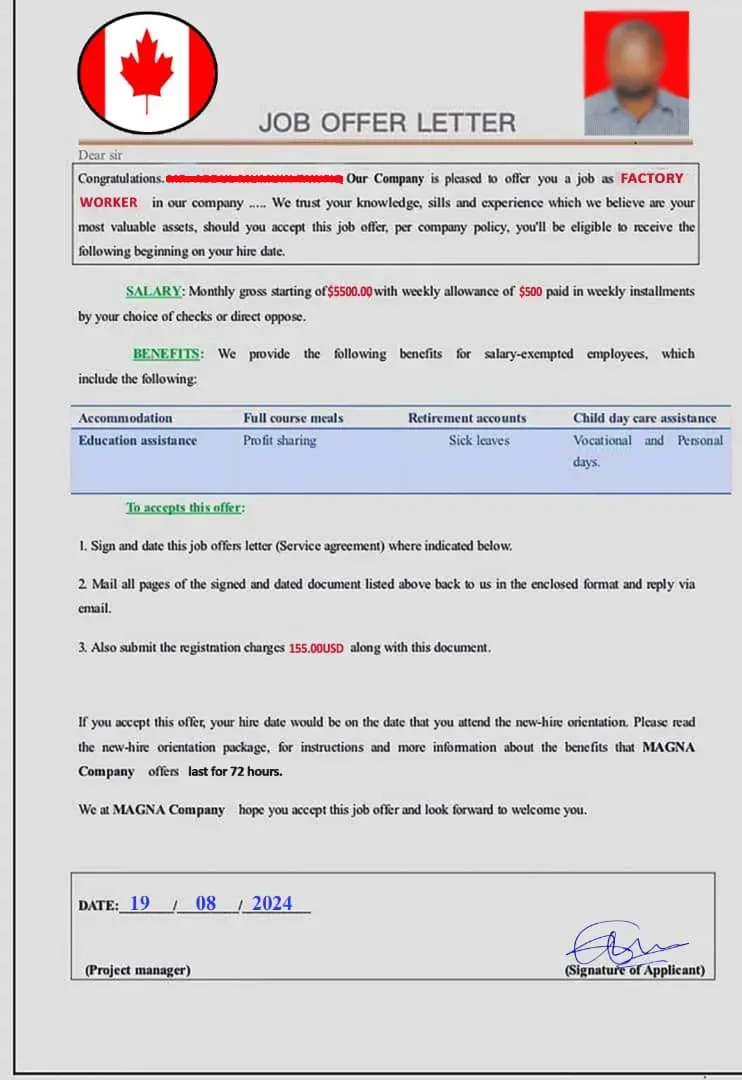
1. Job Scams / Employment Scams / Recruitment Scams
Source: https://hopeeducationproject.org/how-to-spot-fake-job-offers-protect-yourself-from-scams/
You see a job post on Facebook groups for newcomers, WhatsApp communities, Telegram channels, or smaller job boards you don't fully recognize. Sometimes you didn't even hit apply, and the "employer" reaches out directly, saying they "found your profile".
The hiring process moves fast. Too fast, and the pay and benefits are often too good to be true.
Interviews happen over chat or a short call. There's little discussion about experience, references, or paperwork. You're told they're urgently hiring and willing to "help immigrants get started in Canada."
Then you're asked to send money.
The Payment Request
The payment is framed as:
- Mandatory training costs
- Payroll or system activation
- A processing or onboarding fee
- Payment for equipment or uniforms
- LMIA (Labor Market Impact Assessment) or work permit "assistance"
Once the money is sent, communication slows, excuses begin. Or the contact disappears entirely.
Common Phrases Job Scammers Use
These phrases are extremely common in Canadian job scams:
- "This is a limited-time opportunity."
- "This is standard procedure for newcomers."
- "We will help you with LMIA / work authorization."
- "Payment is refundable after your first paycheck."
- "HR will finalize everything once payment is confirmed."
If you hesitate, the pressure escalates:
- "We have other candidates waiting."
- "Delays could affect your eligibility."
- "If you miss this window, the offer will be withdrawn."
Why This Works on Immigrants
Job scams work because they exploit real, situational pressure. Scammers know that fear of missing a job — especially one tied to "legal work" or "LMIA support" — makes people act before verifying.
New immigrants:
- May be unfamiliar with Canadian hiring norms
- Are often urgently looking for work to cover rent and living costs
- May believe paying upfront is normal if it was common in their home country
- May feel extra pressure if their immigration status or family obligations depend on employment
What to Do Instead
In Canada, these rules are non-negotiable:
Legitimate employers do not charge workers to get hired. You should never pay for:
- Training
- Interviews
- Equipment
- Payroll setup
- Job applications
- LMIA processing
LMIA costs are paid by the employer, not the worker.
Real employers:
- Have a verifiable website and physical address
- Use corporate email addresses
- Conduct proper interviews
- Never rush payment
2. Immigration & Government Impersonation Scams
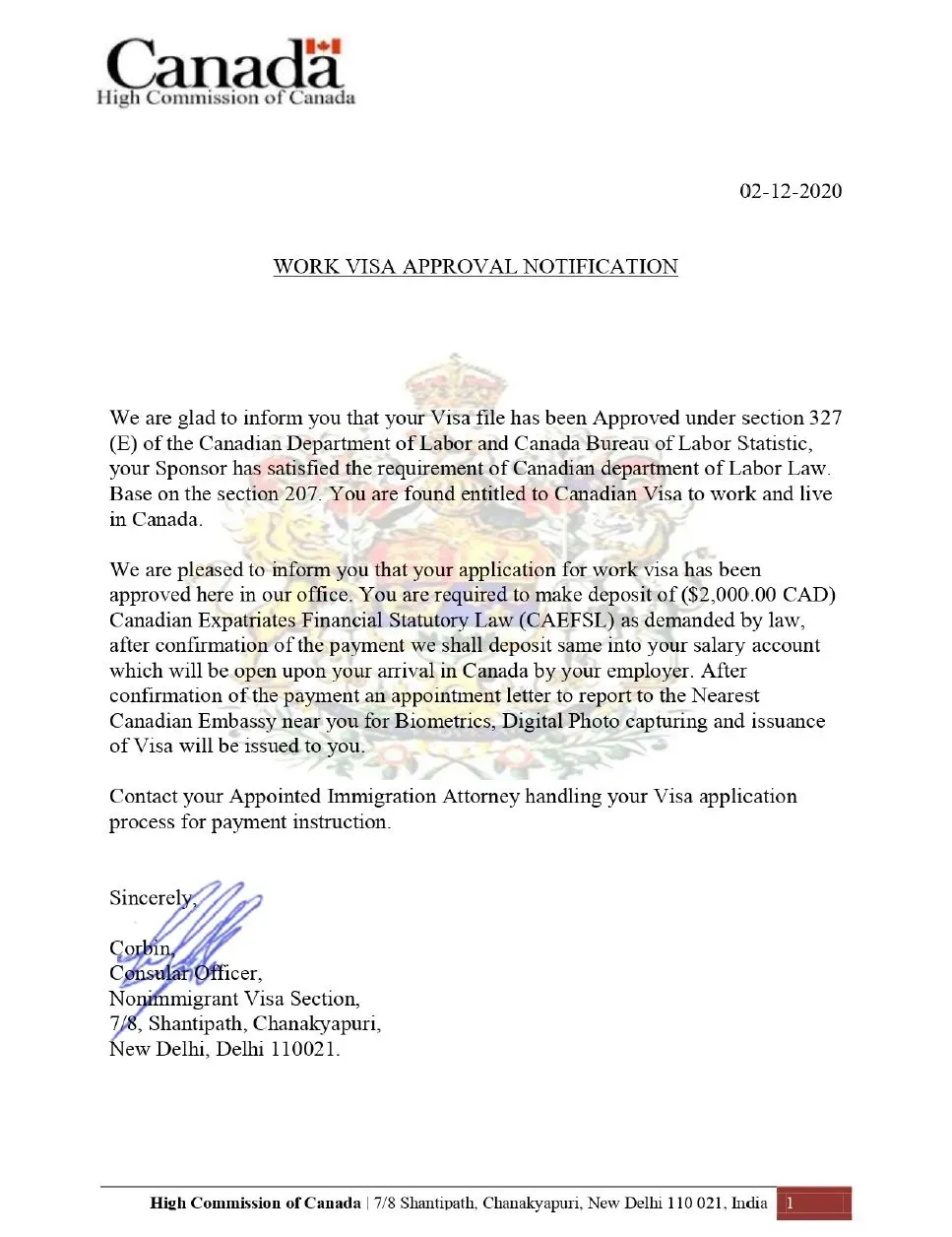
Source: https://canadaabroad.com/news/general-news/how-to-spot-a-canadian-immigration-job-scam/
Your phone rings. Caller ID might even look official. The person says they're calling about your immigration file. They sound confident, rushed, and irritated if you ask questions.
It's not always a call. Sometimes it's a text or email with a "case number," your name, or details they scraped from leaked data. The message is always the same: something is wrong, and it needs to be fixed today.
Common Phrases Immigration Scammers Use
- "IRCC NOTICE: Your immigration file is under review. Immediate action required. Pay outstanding fee to avoid enforcement."
- "You have violated immigration rules. A warrant will be issued within 2 hours. Do not inform anyone. Payment required to stop escalation."
- "Your status will be cancelled today unless you confirm details and make payment."
- "This is confidential. Don't speak to anyone."
- "If you hang up, your file will be marked non-compliant."
- "Pay now by transfer/prepaid cards/crypto."
- "We will send officers to your address."
Why This Works on Immigrants
Because the threat isn't only the money. It's your entire life in Canada. If you're still learning the system, it's easy to think: Maybe I missed a form. Maybe I did something wrong. Maybe this is how it works here.
They also know you may be dealing with:
- Fear of delays or rejection
- Language gaps (you don't want to sound "confused")
- Pressure to "solve the problem fast" so it doesn't snowball
What to Do Instead
- Hang up. No debate. No "let me just hear them out."
- Don't pay. Canadian government agencies don't demand payment by phone or through money transfer / gift cards / prepaid cards.
- Verify using official government sites you type yourself, not links they send.
- If you already shared info or sent money: call your bank immediately and report it to CAFC.
3. Bank / Interac / OTP Scams
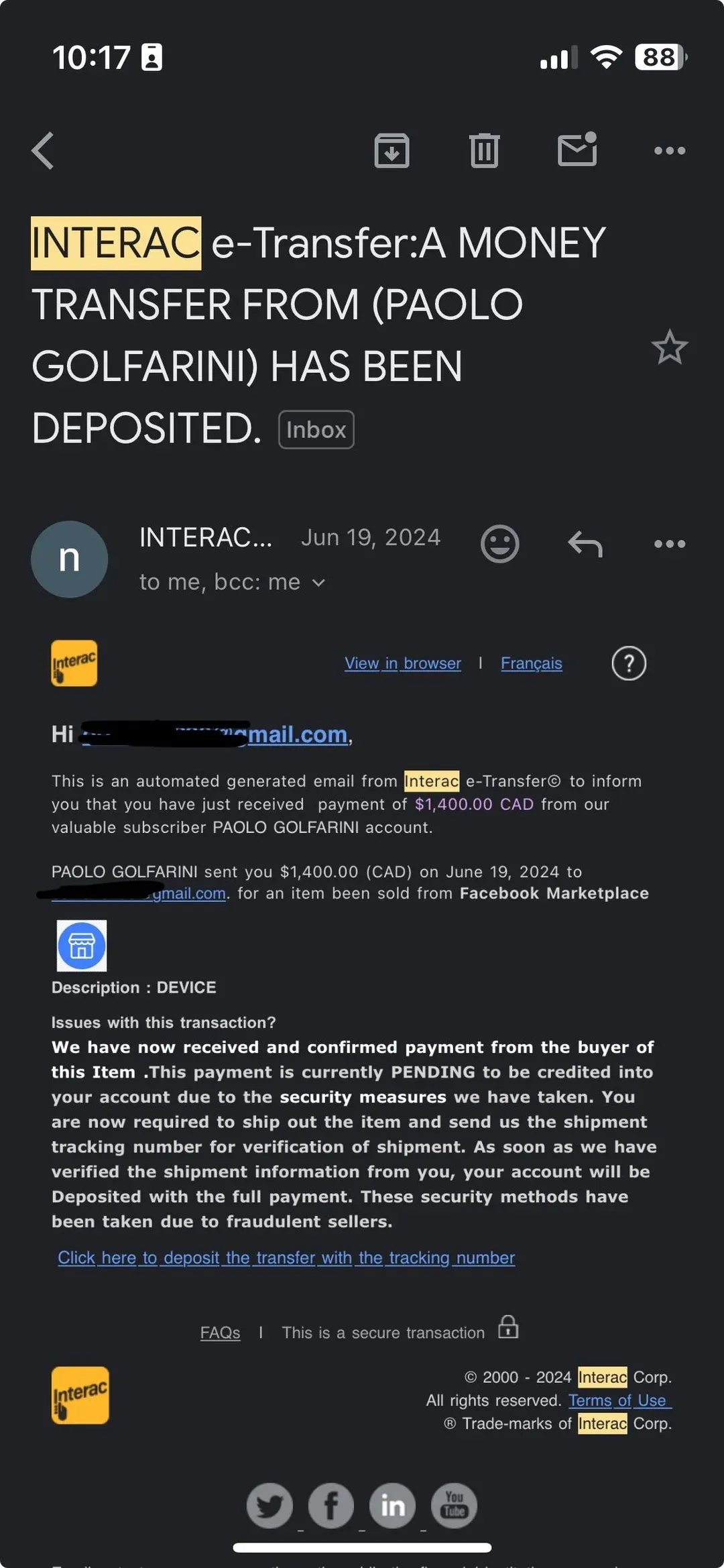
Source: https://www.reddit.com/r/Scams/comments/1jadj17/interacetransferscam/#lightbox
The very common Interac e-Transfer scam usually comes as an email saying you've received money, but the transfer hasn't been credited to your account yet. The message claims the payment is "pending," "on hold," or "requires verification," and asks you to click a link or provide information to release the funds.
Another type of scam is when you get a call or text claiming to be from your bank. They say there's fraud on your account and they're "trying to protect you."
Then, while they're talking to you, you receive a real OTP (one-time password) from your bank. They ask you to read it out "to verify you."
That OTP is not for verification. It's for logging into your account.
Common Phrases Bank Scammers Use
- "This code is just to verify you."
- "Don't worry, I'm here to help you."
- "If you don't share it, your account will be frozen."
- "Move your money to a safe account temporarily."
- "Interac Security: Your e-Transfer is on hold. Verify now to avoid cancellation."
- "Your bank account will be locked in 30 minutes. Confirm identity using the code you received."
- "RBC Fraud Dept: suspicious login detected. We sent a code. Read it to confirm you are the account holder."
Why This Works on Immigrants
If you're new to Canadian banking, OTPs and fraud alerts can feel unfamiliar. You're also more likely to believe "bank procedures" you haven't seen before.
Also: immigrants often send money abroad and use transfers more often. Scammers know you're already "in motion" financially, so the message doesn't feel random.
What to Do Instead
- Never share OTPs. Not with anyone. Ever.
- Hang up and call the number on the back of your debit card.
- If you clicked a link or shared a code: immediately contact your bank, change passwords, and ask them to secure your account.
4. Family Emergency Scams
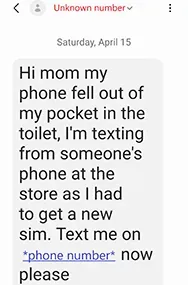
A WhatsApp or text message: "Hi, it's me." New number. Urgent tone. A problem that needs money right now.
Sometimes it's "Mom, I'm stuck at the airport." Sometimes, "I've been arrested." Sometimes, "I had an accident." The details don't matter — the goal is to keep you panicking long enough to send money.
- "Please don't tell anyone. I'll explain after."
- "I'm at the airport, and they won't let me leave. I need help urgently."
- "My phone broke. This is my new number. I'm in trouble. Please send money now — don't call."
Common Phrases Scammers Use
- "Don't call. I can't talk."
- "I'm ashamed. Please help."
- "Send now. I'll pay you back."
Why This Works on Immigrants
Distance + time zones + responsibility. You're used to helping family abroad, and you don't want to be the reason someone suffers.
They also exploit the fact that many immigrant families communicate mainly on WhatsApp — so the channel feels normal.
What to Do Instead
- Don't send money based on a message.
- Call the person at a number you already have. If they refuse calls, that's the giveaway.
- Verify with one other family member.
- If the story involves police/hospital: ask for a verifiable detail (hospital name + ward + doctor name). Scammers hate specifics.
5. Housing / Rental Deposit Scams

Source: https://www.facebook.com/groups/1225243587807703/posts/2771051843226862/
You're hunting for a place fast. You find a "great deal" on Facebook Marketplace or newcomer groups. The landlord claims there's high demand and you need to send a deposit to "hold" the unit.
They avoid in-person viewing. Or they show you a place that isn't theirs. Or they say they're "out of town" and will mail keys after payment.
Common Phrases Scammers Use
- "Many applicants. If you want it, send deposit today and I'll remove the listing."
- "I'm not in Canada right now. Pay first and I'll courier the keys."
- "Viewing isn't possible. The current tenant is still inside."
- "First and last month required now."
- "Send the deposit to secure it."
- "No time — someone else is ready to pay."
Why This Works on Immigrants
Housing is one of the biggest stress points when you're new. You may not have credit history. You may not know local rental norms. You may be desperate to avoid wasting time or money.
What to Do Instead
- Never send a deposit before viewing and confirming ownership/legitimacy.
- Pay through traceable, documented methods only — and only after signing.
- If they rush, refuse a viewing, or won't show proof they own/manage the unit: walk away.
6. Romance Scams
It usually doesn't start with money. It starts with attention.
Someone messages you consistently. They remember details. They listen. They make you feel seen, often when you're new to Canada, lonely, or rebuilding your life.
The relationship moves fast. They talk about the future early. They push for exclusivity. They say things like "I've never felt this way before" or "I don't talk to anyone else like this."
They often avoid video calls or always have a reason why the camera can't work. Then they ask for money so they can fly to come and see you. Or they tell you about an "exclusive" investment opportunity they've discovered and benefited from, and ask you to consider investing for "your future together".
Common Phrases Romance Scammers Say
- "This is temporary."
- "If you loved me, you would help."
- "You're the only person I can trust."
- "My account is frozen. I'll repay you next week."
- "I want to visit you, but I need help with the ticket."
- "Please don't tell anyone. People will misunderstand us."
Why This Works on Immigrants
When you're new to Canada, your circle is smaller. Family is far away. Friends are scattered across time zones. And most days, you're focused on surviving. When someone shows up consistently, asks how your day went, and remembers small things, it doesn't raise alarms at first.
What to Do Instead
- Demand a live video call.
- Reverse-image search their photos.
- If they push secrecy and/or urgency, end it.
- Send no money to someone you haven't met and verified.
7. Sextortion Scams
You get a message out of nowhere. It says they've been watching you. It claims they recorded you through your camera or have private photos of you. Sometimes they attach an old password you used years ago to scare you.
The threat is specific: They say they'll send the images to your family, your community, your workplace. And they give you a short deadline to pay before they "release everything."
Common Phrases Sextortion Scammers Use
- "I have full access to your device."
- "Your camera was hacked weeks ago."
- "Do not contact police — they can't help."
- "I know this is your password: [old password]."
- "I have access to your contacts and social accounts."
- "Do not tell anyone. This makes it worse."
- "I recorded you through your webcam."
- "If you block me, I'll send everything."
Why This Works on Immigrants
Scammers often reference family networks that span countries, tight-knit cultural or religious communities, or workplaces where you're still new and building trust. When someone names specific groups, it creates a sense that damage will spread quickly and permanently.
That's what pushes people to act immediately instead of stepping back to question whether the threat is even real.
What to Do Instead
- Don't pay. Payment invites more demands.
- Save evidence. Block and report on the platform.
- Change passwords and enable 2FA.
- If you feel unsafe: contact local police.
8. Tech Support Scams
A pop-up or call says your device is infected with a virus. They offer to fix it, but they need remote access or payment. Sometimes they pretend your computer is sending "illegal signals" or your bank account is compromised.
Common Phrases Tech Support Scammers Use
- "Microsoft Security Alert: Your device is infected. Call immediately."
- "We detected unusual activity. Give remote access so we can secure your device."
- "If you close this, your data will be lost."
- "We need your banking to stop fraud."
- "Pay now for protection."
Why This Works on Immigrants
Because your phone/laptop often is your lifeline: work, banking, immigration emails, family calls. The fear of losing access is huge.
What to Do Instead
- Close the pop-up. Don't call the number shown.
- Don't give remote access.
- Use official support pages you find yourself.
- If you gave access: disconnect internet, change passwords from another device, and call your bank.
9. Investment Scams
You're added to a WhatsApp group. Someone claims to be a mentor. They show profits, testimonials, and "signals." They may let you withdraw a small amount early to prove it's real, then pressure you to deposit more.
Common Phrases Investment Scammers Use
- "This is insider information."
- "Banks don't want you to know this."
- "You're missing out."
- "Guaranteed returns. Low risk. I'll guide you."
- "Deposit today! The window closes tonight."
- "Everyone is doubling money."
Why This Works on Immigrants
When you're rebuilding financially, the temptation to accelerate stability is real. Scammers exploit that hope — and the fact that many newcomers aren't familiar with Canadian investor protections.
What to Do Instead
- Remember that "guaranteed profit" is always a lie.
- Verify registration with your provincial securities regulator before sending money.
- Never send money to personal accounts.
- If you can't explain the investment clearly, don't touch it.
10. Prize / Lottery Scams
A message or email lands saying you've won something you don't even remember entering.
Sometimes it's framed as:
- An international lottery
- A visa or immigration-related draw
- A Google, Meta, or global brand prize
- A promotion tied to email, phone number, or residency
Sometimes they'll even send fake certificates, official-looking logos, poorly formatted "approval letters". Just enough to make it feel structured.
The amount sounds life-changing, but not impossible. The message explains that the prize is real, and you just need to "complete the final step" to receive it.
That final step is always a payment.
Common Phrases Lottery Scammers Use
- "Send the fee to release the funds."
- "This is the final confirmation window."
- "You must pay taxes or processing fees first."
- "We need your bank details to deposit your prize."
- "Your email/number was chosen from our global database."
- "You have won $50,000. Pay processing fee to receive funds."
- "The transfer confirms you are the rightful recipient."
- "We need your bank details to deposit the prize."
- "The prize expires if not claimed today."
- "Failure to act will void your eligibility."
Why This Works on Immigrants
For many immigrants, stories involving foreign prizes, international programs, or cross-border money don't immediately sound impossible.
Some people have seen:
- Real lotteries back home
- Visa-related draws
- Government or employer-linked benefits
When the message uses global brands, official language, or mentions international selection, it blends into things you've already experienced, especially if English isn't your first language and the wording sounds formal.
What to Do Instead
Keep in mind that in Canada:
- No real organization asks for banking details by message
- Legitimate prizes do not require upfront payment
- Taxes are not paid before receiving winnings
- If you didn't enter, you didn't win. Simple.
Don't send "fees." Don't share bank details. Delete the message and move on.
If you already engaged or sent money:
- Contact your bank immediately
- Keep all messages and receipts
- Report it to the Canadian Anti-Fraud Centre
11. Marketplace Scams
Marketplace scams usually show up when you're buying or selling everyday things like furniture, phones, appliances, cars, baby items. The stuff newcomers often need quickly.
There are two very common patterns.
Overpayment Scam (Buyer Side)
Someone agrees to buy your item and "accidentally" sends more than the agreed amount. They immediately message you, sounding stressed, and ask you to send the difference back.
Sometimes they send:
- A screenshot of a transfer
- A fake payment confirmation
- A cheque or money order image
Before the payment actually clears, they push you to refund the extra.
Fake Seller Scam (Seller Side)
You find a great deal. The seller is responsive and polite. They ask for a deposit or full payment to "hold the item," then disappear or claim there's a shipping issue and ask for more money.
Often, the conversation moves off-platform quickly.
Common Phrases Marketplace Scammers Use
They create urgency and trust at the same time:
- "I'm in a rush, can you send it back quickly?"
- "The bank made a mistake."
- "My cousin / brother / friend will pick it up."
- "Let's do this off-platform to avoid fees."
- "Here's proof I sent the money."
If you hesitate:
- "I trusted you."
- "Please don't make this difficult."
Why This Works on Immigrants
Newcomers rely heavily on marketplaces to set up life fast, often on tight budgets. Quick deals feel practical to them, not risky. And when someone sounds polite, apologetic, or "just trying to fix a mistake," it's easy to act before fully understanding how Canadian payments actually clear.
Such screenshots and confirmations look convincing if you haven't dealt with local banking systems for long.
What to Do Instead
- Keep communication and payment inside the platform
- Never refund money until it fully clears in your bank
- Don't trust screenshots or "pending" confirmations
- Don't move off-platform to "save fees"
- Meet buyers in safe, public places
If money was sent or refunded:
- Contact your bank immediately
- Keep all messages and payment records
- Report it to the Canadian Anti-Fraud Centre
12. Crisis / Benefit Scams
This one usually doesn't feel like a scam when it arrives. It shows up during a moment when everything already feels uncertain: COVID rules changing, new benefits being announced, healthcare updates, and cost-of-living relief in the news.
You get a message saying you're eligible for something. Maybe it's a rebate, maybe it's a missed payment, maybe it's an update to your benefits or health coverage.
It asks you to "confirm" something. Your direct deposit, your details, or your eligibility, urging you to complete just one small step so your benefits don't get delayed.
Common Sub-Types of Health Scams You'll See
Government benefit scams
- Fake CRA or Service Canada messages
- Claims about missed payments, refunds, or eligibility updates
- Requests to "confirm direct deposit"
Health-related scams
- Messages claiming you tested positive
- Requests for health card numbers or insurance details
- Fake offers for tests, treatments, or vaccines
Charity and aid scams
- Requests for donations tied to disasters or health crises
- Messages pretending to be from known charities or agencies
Employment & work-from-home scams
- Fake remote jobs "created due to the crisis"
- Requests for fees, equipment payments, or identity details
Common Phrases COVID Scammers Use
- "Your rebate is on hold."
- "Confirm details to release funds."
- "Additional information is required."
- "Update required to avoid interruption."
- "Please confirm your direct deposit information."
- "Action required to continue receiving payments."
- "We were unable to process your last payment."
- "Your account requires verification."
- "You are eligible for this payment."
- "Your benefit status is pending."
Sometimes it's slightly more specific:
- "Confirm health card details."
- "You may have been exposed."
- "Health record update required."
Health-related versions often say:
- "Final reminder to confirm eligibility."
- "Test results pending, action needed."
- "CRA: Your refund cannot be deposited."
- "Service Canada: Direct deposit update needed."
- "Benefit payment delayed due to missing information."
And the link or next step is framed as routine:
- "Test results pending — action needed."
- "Complete this step to proceed."
- "Health record update required."
- "You may have been exposed."
- "Confirm health card details."
- "Click here to verify."
- "Log in to continue."
Why This Works on Immigrants
When you're new to Canada, you already expect to receive government communication like forms, updates on rule changes, emails you don't fully understand yet, etc. So when something says "verify" or "confirm," it doesn't feel suspicious.
A lot of people think:
- "Maybe this is normal."
- "Maybe I missed something."
- "I don't want to mess this up."
What to Do Instead
Here's the rule that cuts through all of it:
Canadian government agencies don't ask you to confirm benefits through links sent by text or email. They don't ask for banking or health details in messages. They don't rush you into money transfers.
If something claims to be official, don't interact with the message itself. Go directly to the official website. Log in the way you normally would. Or call using a number you look up yourself.
If you already shared information or sent money:
- Contact your bank immediately
- Secure your accounts
- Report the incident to the Canadian Anti-Fraud Centre
The 10-Second Red Flag Checklist
If a message, call, or email asks you to move money, stop and review this quickly. It'll take you ten seconds and may save you tens of thousands of dollars.
Is this message unexpected? You didn't start the conversation. They did.
Is there urgency or a deadline? "Act now." "Final notice." "Expires today." Real institutions don't rush you like this.
Are they asking you to keep it secret? Any request that includes "don't tell anyone" is a red flag.
Are they asking for payment by transfer, gift cards, or crypto? Canadian banks, government agencies, and employers don't collect money this way.
Are they asking you to click a link or share a one-time code? No legitimate organization needs your OTP, password, or login codes.
Does the message sound official but slightly off? Generic greetings. Awkward wording. Often poor grammar. Strange sender address. Close, but not quite right.
Are they asking you to "confirm" or "verify" information you already gave elsewhere? That's how most benefit and bank scams start.
Are they discouraging you from calling the organization directly? Real institutions want you to verify. Scammers don't.
Does something feel off, but you can't explain why? That pause matters. Scams rely on you ignoring it.
Would this make more sense if you checked it independently first? If yes, pause. Check it. Don't act from the message itself.
If as little as two or more of these show up at the same time, don't send money. Don't reply. Don't click on anything. Step away from the message and verify on your own terms.
How to Report a Money Transfer Scam in Canada
Many immigrants hesitate to report scams because they fear in the background: Will this affect my immigration status? Am I supposed to respond first? Will I look foolish for not knowing?
Scammers count on that hesitation. They push urgency so you don't pause, and shame so you don't ask for help. That silence is exactly what lets these scams keep spreading. As we mentioned in the beginning, most fraud in Canada goes unreported, which makes it harder to spot patterns and stop repeat targeting, especially of newcomers.
Reporting doesn't put your status at risk. It doesn't get you in trouble. You don't need to have done everything "right" to speak up. In fact, your report could be the thing that helps protect someone else from being hit next. If something feels off, you don't need proof before asking for help. It's okay to pause first and take your time as you wait. Real institutions don't disappear overnight, scammers do.
If you think you've been scammed, or even if you're not completely sure, here are the next steps that explain exactly what to do in the first 10–30 minutes after you realize something's wrong, without judgment and without pressure.
Step 1: Call Your Bank Immediately
This is the most important step.
If you sent money, shared banking details, clicked a link, or gave out a one-time code, call your bank right away using the number on the back of your debit or credit card.
Tell them plainly:
- What happened
- How the contact started (call, text, email, marketplace, dating app, etc.)
- What you sent or shared
- When it happened
Banks can sometimes:
- Stop or reverse a transfer (if caught early)
- Freeze suspicious activity
- Secure your account before more money is taken
Even if you feel embarrassed or unsure, call anyway. This is routine for them, and they won't judge you for it.
Step 2: Secure Your Accounts
After speaking to your bank, take a few minutes to lock things down:
- Change passwords for online banking, email, and payment apps
- Enable two-factor authentication where possible
- Check your recent transactions carefully
If the scam involved identity details (SIN, health card, CRA account):
- Ask your bank or Service Canada what additional steps to take
- Monitor for unusual activity over the next few weeks
Step 3: Report It to the Canadian Anti-Fraud Centre (CAFC)
The CAFC is Canada's national reporting centre for fraud and scams.
You can report:
- Even if you didn't lose money
- Even if you're unsure it was a scam
- Even if it already happened days ago
You'll be asked for:
- How the scam started
- What was said or sent
- Payment details (if any)
- Screenshots, emails, or phone numbers involved
Take your time. You don't need to explain it perfectly.
CTA: Report a money transfer scam
Step 4: If It Involves Identity or Threats, Report It Locally
If the scam included:
- Identity theft
- Threats
- Blackmail
- Immigration or legal impersonation
Contact your local police service. This helps create a record, especially if problems show up later.
The Takeaway
These money transfer scams work because they hit at the exact moments immigrants are already desperate and under pressure: looking for jobs, dealing with immigration paperwork, supporting family abroad, and money moving quickly.
This guide isn't here to make you suspicious and paranoid of everything. It's here to help you recognize when something money-related doesn't line up with how things actually work in Canada, and to feel comfortable slowing down, checking, and asking questions before taking any action.
That's also why the way you send money matters. RemitBee is built for immigrants who send money regularly and need the process to feel transparent and predictable: clear rates, traceable transfers, and a real support team if something doesn't feel right. When sending money internationally feels routine instead of urgent or confusing, scammers lose the pressure they rely on, and it becomes harder for them to pull you into panic.
Sending money home today? Do it safely with RemitBee.
Frequently Asked Questions
Do Banks Refund Scammed Money in Canada?
Banks sometimes refund scammed money in Canada, but speed and circumstances matter. If you report an unauthorized transaction to your bank as soon as you notice it, you may be eligible for a refund, especially if you took reasonable steps to protect your PIN, passwords, and login details.
In Canada, you're generally not held responsible for losses caused by things outside your control, such as technical failures or account access you didn't authorize. That said, if you knowingly sent money or shared a one-time code, recovery is harder, which is why calling your bank immediately is critical.
Can a Scammer Hack You Just Because You Replied to Them?
No. Replying to a scam message doesn't instantly give someone access to your phone or bank account. But it does signal that your number or email is active, which can lead to more targeted scams, follow-ups, or phishing attempts.
Some scammers use replies to test who's likely to engage, then escalate with more convincing messages later. That's why the safest move is not to reply at all and to block or report the message immediately.
Can a Scammer Do Anything With Just Your Email Address?
Yes. Even without passwords, your email address can be used to impersonate you or target people around you. Scammers may send phishing emails that appear to come from you, especially if it's a work email, or use it to build more believable scams using your name or employer.
If you think your email was exposed, change your password, enable two-factor authentication, and warn close contacts to ignore unexpected messages that appear to be from you.