Bank reconciliation is the process of comparing your internal cash records (your books) with your bank statement to ensure both show the same balance. The two almost never match at first glance — timing differences, bank fees, and unrecorded transactions create discrepancies. Reconciliation identifies these differences, adjusts both records, and produces an accurate picture of your actual cash position.
In this article, we'll be covering:
- Step-by-step reconciliation process
- Example bank reconciliation statement
- Key terms (outstanding checks, deposits in transit, NSF checks)
- Why bank reconciliation matters for cash flow and fraud detection
- Common causes of discrepancies between books and bank statements
Why Does Bank Reconciliation Matter?
Reconciling your bank account isn't mere bookkeeping housework. It directly affects cash management, error detection, and your ability to spot fraudulent activity before it causes serious damage.
Cash Flow Accuracy
Your cash balance drives business decisions. Whether you're deciding to pay a vendor early, hire a new employee, or hold off on a purchase, you need to know how much money you actually have — not just what your books suggest. Bank reconciliation gives you that true cash figure.
Without it, you might:
- Overdraw your account by paying bills you can't cover
- Miss opportunities by underestimating available funds
- Make strategic decisions based on incorrect data
Regular reconciliation (monthly at minimum, weekly or daily for high-volume businesses) keeps your cash visibility accurate and current.
Error Detection
Mistakes happen on both sides — your internal records and the bank's. Bank reconciliation catches these errors quickly. Transposition errors (switching digits like $789 vs $798) create differences divisible by 9 — a useful shortcut when hunting for mistakes.
Fraud Prevention
Item-by-item reconciliation reveals unauthorized transactions that might otherwise go unnoticed. If your records show a $440 check to a heating company, but your bank statement shows $490, someone may have altered the check. Catching this during reconciliation (rather than months later) limits damage and preserves your audit trail.
Regular reconciliation also deters internal fraud. Employees who know accounts are reviewed monthly are less likely to attempt embezzlement.
What Causes Differences Between Your Books and Your Bank Statement?
The cash balance in your books and the balance on your bank statement rarely match. Understanding why helps you reconcile efficiently.
Timing Differences
Most discrepancies come from transactions recorded at different times. These aren't truly considered errors — they're simply timing gaps. Your reconciliation adjusts for them.
Bank Charges and Credits
Banks add fees and credits that don't appear in your books until you see the statement. These items require journal entries to bring your books in line with the bank.
Errors
Both you and the bank can make mistakes. Your errors could include:
- Recording wrong amounts
- Forgetting to record transactions
- Recording the same transaction twice
Meanwhile, bank errors could include:
- Processing incorrect amounts
- Crediting wrong accounts
- Duplicate charges
Bank errors are rare but do occur. When you find one, contact the bank immediately to request a correction.
| Error Source | Examples |
|---|---|
| Internal (your books) | Data entry mistakes, transposed numbers, missed transactions, duplicate entries |
| External (bank) | Incorrect deposit amounts, transactions posted to the wrong account, and processing errors |
What Terms Do You Need to Know?
Bank reconciliation uses specific terminology. Knowing these terms makes the process clearer.
The key reconciliation formulae include:
Bank side: Bank balance + deposits in transit − outstanding checks ± bank errors = adjusted balance.
Books side: Book balance + credits (interest, memos) − debits (fees, NSF) ± book errors = adjusted balance.
When both adjusted balances match, reconciliation is complete.
Timing Issues
| Timing Issue | What Happens |
|---|---|
| Outstanding checks | You recorded a check when you wrote it, but the recipient hasn't cashed it yet |
| Deposits in transit | You recorded a deposit when you received payment, but the bank hasn't processed it |
| End-of-period cutoff | Transactions recorded on the last day of the month may not clear until the next month |
Bank Items and Their Effects
| Bank Item | Effect on Reconciliation |
|---|---|
| Service charges | Decrease your book balance |
| Overdraft fees | Decrease your book balance |
| Wire transfer fees | Decrease your book balance |
| Interest earned | Increase your book balance |
| Loan proceeds (credit memo) | Increase your book balance |
Key Terminology
| Term | Definition |
|---|---|
| Book balance | Cash amount in your general ledger before reconciliation adjustments |
| Bank balance | Cash amount reported on your bank statement |
| Outstanding check | Check you've written and recorded, but the bank hasn't paid yet |
| Deposit in transit | The deposit you've recorded, but the bank hasn't processed it yet |
| NSF check | "Non-sufficient funds" — a check that bounced because the payer's account lacked funds |
| Bank credit memo | Bank notification that your account increased (loan proceeds, interest) |
| Bank debit memo | Bank notification that your account decreased (fees, loan payments) |
| Adjusted balance | Final reconciled cash amount after all adjustments — should match on both sides |
| Cleared transaction | The transaction was processed and recorded by both you and the bank |
| Uncleared transaction | Transaction in your books but not yet on the bank statement (or vice versa) |
How Do You Perform a Bank Reconciliation?
Follow these steps to reconcile your bank account. The process works whether you're reconciling manually, with spreadsheets, or using accounting software.
Step 1: Gather Documents
Collect everything you need before starting:
- Deposit records
- Bank statement (paper or online)
- Check register or payment records
- General ledger cash account records
- Previous month's reconciliation (for reference)
Organize documents by date. Having everything in order prevents backtracking.
Step 2: Compare Balances
Start with the ending balances from both sources:
- In bank statements, note the ending balance as of the statement date
- For your books, note the cash account balance in the general ledger as of the same date
These two numbers will almost certainly differ — that's expected.
Step 3: Identify Discrepancies
Go line by line through both records. Flag items that appear in one but not the other.
Items on your books but NOT on the bank statement:
- Errors you made that need correction
- Outstanding checks (you recorded, bank hasn't paid)
- Deposits in transit (you recorded, bank hasn't processed)
Items on bank statement but NOT in your books:
- Automatic payments or transfers you forgot to record
- Bank fees and service charges
- NSF checks returned
- Interest earned
- Bank errors
A helpful rule is to put the item where it isn't. If it's in your books but not on the bank statement, adjust the bank side. If it's on the bank statement but not in your books, adjust the book side.
Step 4: Adjust Balances
Make adjustments to align both balances.
Adjustments to bank balance:
| Item | Adjustment |
|---|---|
| Deposits in transit | Add to the bank balance |
| Outstanding checks | Subtract from the bank balance |
| Bank errors (overcharges) | Add to the bank balance |
| Bank errors (undercharges) | Subtract from the bank balance |
Adjustments to book balance:
| Item | Adjustment |
|---|---|
| Interest earned | Add to the book balance |
| Bank credit memos | Add to the book balance |
| Service charges | Subtract from the book balance |
| NSF checks | Subtract from the book balance |
| Your recording errors | Add or subtract as needed |
After adjustments, both adjusted balances should match. If they don't, re-examine your work for missed items.
Step 5: Record the Reconciliation
Two final tasks complete the process:
- Record journal entries for book-side adjustments. Bank fees, interest, and NSF checks need entries in your general ledger.
- Document the reconciliation with a bank reconciliation statement showing:
- Starting balances
- Each adjustment with an explanation
- Final adjusted balances
Keep this documentation for audit purposes and future reference.
What Does a Bank Reconciliation Statement Look Like?
Here's an example for a contractor, Bay Construction, reconciling its June 30 bank account.
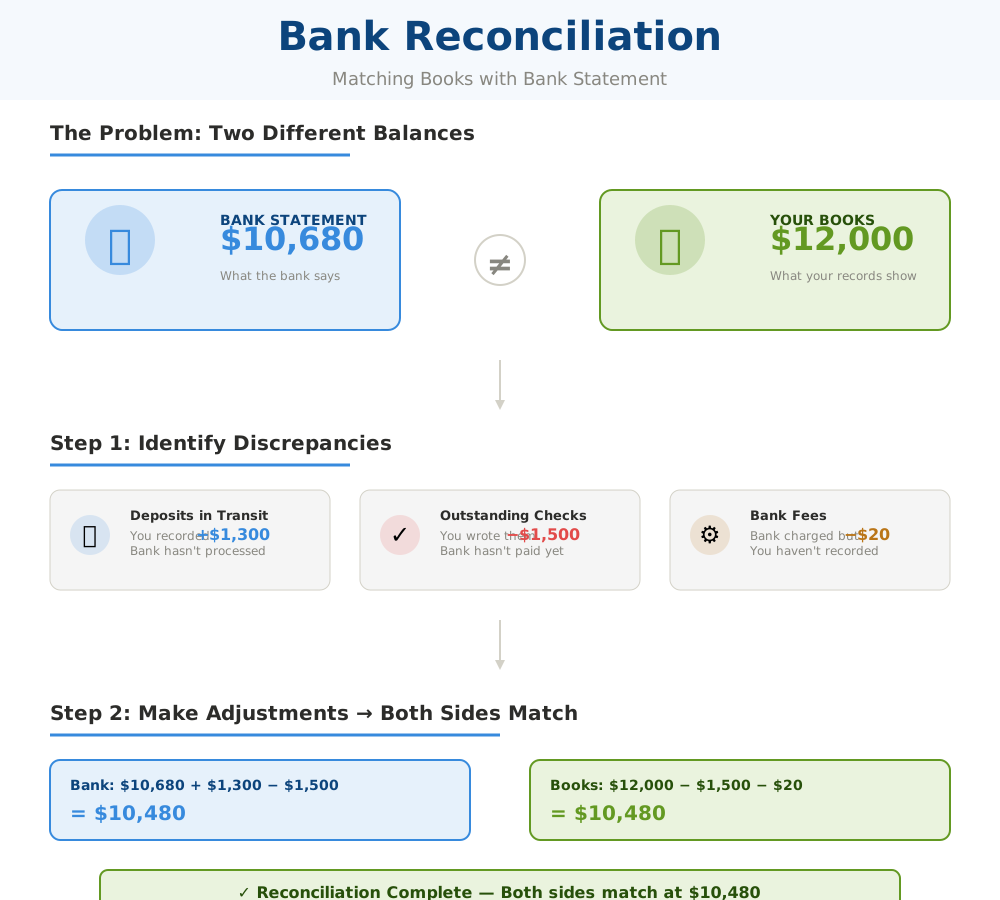
Starting Position
- Bank statement balance: $10,680
- Book balance: $12,000
Identified Discrepancies
- Deposits in transit: $1,300 (client payments received June 29, not yet processed)
- Outstanding checks: $1,500 (check to supplier written June 28, not yet cashed)
- Bank service fee: $20 (not yet recorded in books)
Bank Reconciliation Statement
Balance per BANK:
| Item | Amount |
|---|---|
| Bank statement balance | $10,680 |
| Add: Deposits in transit | +$1,300 |
| Less: Outstanding checks | −$1,500 |
| Adjusted balance per BANK | $10,480 |
Balance per BOOKS:
| Item | Amount |
|---|---|
| Book balance | $12,000 |
| Less: Bank service fee | −$20 |
| Less: Error correction (duplicate entry) | −$1,500 |
| Adjusted balance per BOOKS | $10,480 |
Both adjusted balances match at $10,480. The reconciliation is complete. Bay Construction now records a journal entry for the $20 bank fee (debit Bank Fees Expense, credit Cash) and corrects the duplicate entry error.
Keeping Your Cash Records Accurate
Bank reconciliation is fundamental accounting hygiene. It confirms that your cash records reflect reality, catches errors before they cascade, and protects against fraud.
For businesses managing multiple accounts or handling international transactions (including currency exchange), reconciliation becomes even more critical. Different currencies, transfer fees, and processing times add complexity that only careful reconciliation can untangle.
Set a regular schedule, follow the steps consistently, and document everything. Your future self — and your accountant — will thank you.
Frequently Asked Questions
How Often Should I Reconcile My Bank Account?
Monthly reconciliation is the minimum standard. High-volume businesses (retail stores, restaurants) benefit from weekly or even daily reconciliation. Modern accounting software can automate much of the process, making frequent reconciliation practical.
What If My Reconciliation Doesn't Balance?
Re-examine each step. Check for transposition errors (amounts divisible by 9 often indicate switched digits). Verify you haven't missed any outstanding checks or deposits in transit. Confirm bank fees are recorded. If discrepancies persist, review the previous month's reconciliation for carryover errors.
Do I Need to Record Bank Errors in My Books?
No. Bank errors are the bank's responsibility to fix. Contact the bank to report the error. Your reconciliation notes the error as an adjustment to the bank balance, but you don't make journal entries for the bank's mistakes.
Can Software Automate Bank Reconciliation?
Yes. Accounting software can automatically import bank transactions, match them against your records, and flag discrepancies. Automation reduces manual effort by up to 80% and catches errors faster. However, someone should still review automated reconciliations for accuracy.
What Happens If I Never Reconcile?
Errors compound. Small discrepancies become major mysteries. Cash flow visibility deteriorates. Fraud goes undetected longer. Tax reporting becomes unreliable. Eventually, you lose confidence in your financial statements, which undermines every business decision that depends on accurate data.