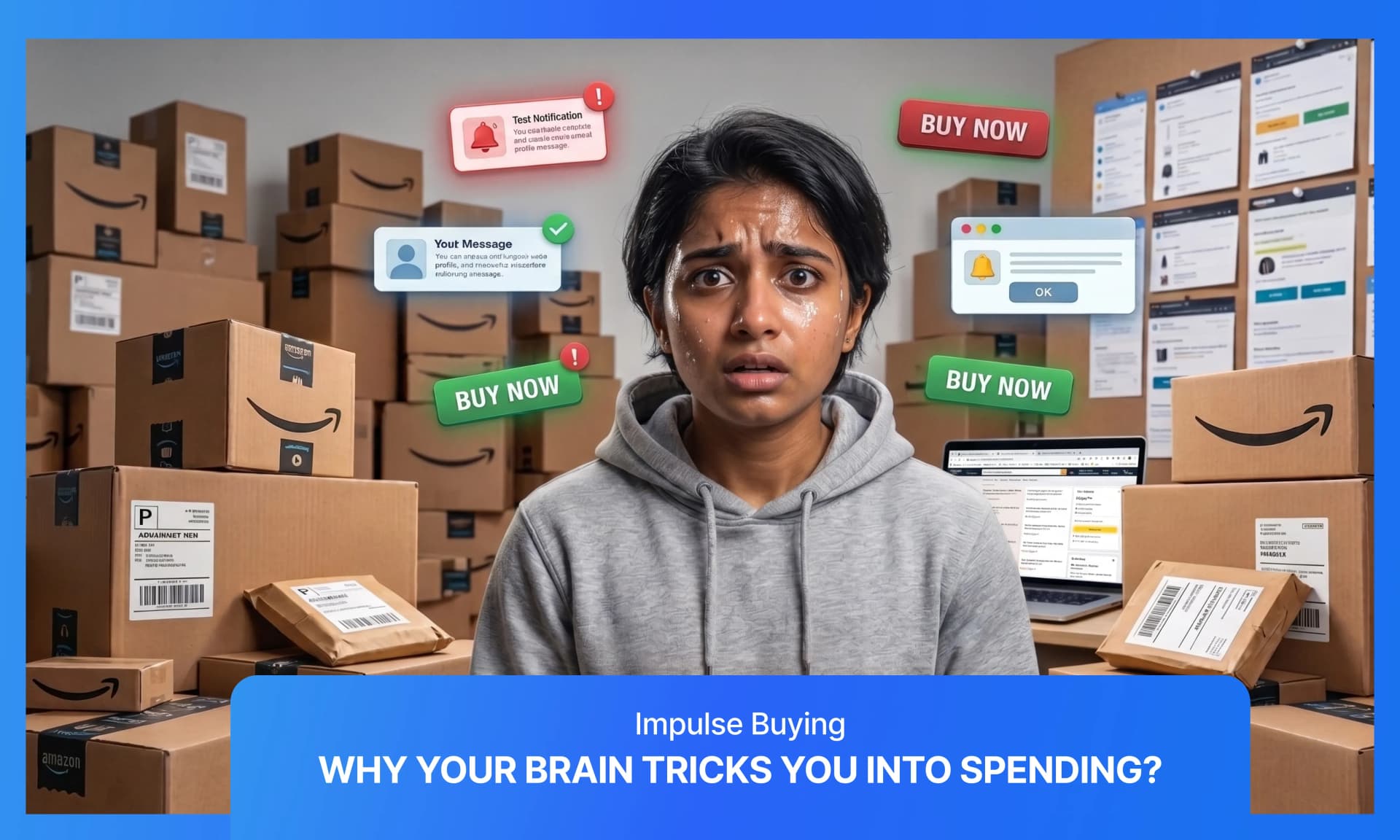
Impulse buying is an unplanned, spontaneous decision to purchase something — triggered by emotion, environment, or a sudden urge rather than deliberate thought.
Research estimates that 40 to 80% of all purchases are impulse-driven, and the average consumer spends roughly $2,000 per year on unplanned items.
The behavior is not limited to checkout-aisle candy — electronics, clothing, vacations, and even cars are routinely marketed to bypass rational evaluation and hit the emotional buy button.
The reason impulse buying persists is biological. A new purchase triggers a dopamine release — the brain's reward chemical — that creates a brief rush of pleasure. For some people (particularly those with ADHD, high emotionality, or low conscientiousness), the urge is difficult to override because the brain's executive function system is already running at a deficit.
In this article, we cover:
- The four types of impulse purchases
- When impulse buying becomes a clinical problem
- What impulse buying actually is (and what it is not)
- Why your personality predicts how much you spend
- Practical strategies that actually reduce impulse spending
- The TEMPO framework for identifying your personal triggers
TLDR: Impulse Buying at a Glance
Here is the quick-reference summary before the detailed analysis.
| Feature | Detail |
|---|---|
| Definition | Unplanned, emotion-driven purchase made without deliberation |
| Estimated share of all purchases | 40–80% |
| Average annual unplanned spending | ~$2,000 per consumer |
| Key personality predictors | Low conscientiousness, low honesty-humility, high emotionality, high extraversion |
| Primary framework | TEMPO (Time, Environment, Mood, Place, Occasion) |
| Most effective counter-strategy | 24-hour waiting rule + automated savings |
What Are the Four Types of Impulse Buying?
Hawkins Stern's classification — the most widely used in consumer psychology — identifies four distinct patterns of unplanned purchases.
Pure Impulse
A complete break from normal shopping behaviour. You see something, feel a sudden desire, and buy it with no prior thought. Grabbing a gadget at an airport shop "just because" fits here.
Reminder Impulse
Seeing a product reminds you of a genuine need you forgot. Walking past toothbrushes reminds you that yours needs replacing. The purchase is unplanned but rational.
Suggestion Impulse
You encounter a product for the first time and convince yourself you need it based on perceived utility or a marketing claim. The "need" did not exist before you saw the item.
Planned Impulse
You enter a store with general intent to buy but wait for a specific deal or promotion to trigger the final decision. The category is planned, while the specific purchase is not.
Why Does Your Personality Predict Impulse Spending?
Research using the HEXACO personality model shows that personality traits collectively explain roughly 27% of the variance in impulse buying tendencies. Two traits inhibit it, while two amplify it.
| Trait | Effect on Impulse Buying | Why |
|---|---|---|
| Conscientiousness | Strong inhibitor | Organized, deliberate people evaluate consequences before acting |
| Honesty-Humility | Strong inhibitor | Low greed-avoidance and status-seeking reduce purchase urges |
| Emotionality | Amplifier | Intense emotional states fuel "retail therapy" as a coping mechanism |
| Extraversion | Amplifier | Lower cortical arousal drives novelty-seeking through purchases |
For individuals with ADHD, the dynamic is more acute. Executive function deficits make it harder to pause and evaluate. The dopamine dysregulation makes the "reward hit" of a purchase feel disproportionately good, and difficulty delaying gratification collapses the gap between wanting and buying.
What Is the TEMPO Framework?
TEMPO is a trigger-identification system that helps you map the specific conditions under which you are most likely to spend impulsively.
Time
Your energy level affects decision quality. Shopping while tired, stressed, or hungry depletes the willpower needed to resist impulse urges. Scheduling purchases for high-energy times reduces vulnerability.
Environment
Certain spaces are engineered to trigger spending — malls, craft fairs, electronics stores, and online platforms with countdown timers. Identifying which environments weaken your resistance is the first step to avoiding them.
Mood
Both negative emotions (sadness, anxiety, stress) and positive emotions (excitement, celebration) fuel impulse spending. Negative moods drive "retail therapy," while positive moods create a rose-coloured perception where everything looks like a great deal.
Place
Specific stores, brands, or even cities can act as personal spending weaknesses. The fix is simple (if uncomfortable): limit exposure to your trigger locations.
Occasion
Holidays, birthdays, work bonuses, and social outings — especially with spending-prone friends — create predictable impulse windows. Budgeting in advance for seasonal occasions removes the surprise factor.
What Strategies Actually Stop Impulse Buying?
The most effective strategies combine waiting periods, financial barriers, and environmental controls.
Delay Tactics
- Leave items in your online cart without checking out — the urgency fades
- Wait 24 hours before any non-essential purchase over $50
- For large purchases, extend the wait to 1–2 weeks
Financial Barriers
- Delete saved credit card info from online stores
- Keep savings at a separate bank from your chequing account
- Set a fixed monthly "fun money" budget and stop when it's gone
- Use cash for discretionary spending (physical money feels more "real")
Environmental Controls
- Avoid browsing shopping apps when bored
- Shop with a list and stick to it — even online
- Unsubscribe from promotional emails and sale alerts
Accountability
- Share spending goals with a partner or friend
- Turn saving into a game by tracking consecutive "no-spend" days
- Review your credit card statements monthly and flag impulse purchases
For individuals with ADHD, external accountability (such as a partner receiving transaction alerts) and professional support — including CBT and medication for dopamine regulation — may be necessary alongside self-directed strategies.
Frequently Asked Questions
Is impulse buying the same as compulsive buying?
No. Impulse buying is a spontaneous, unplanned purchase that most people experience from time to time. Compulsive buying is more persistent and harmful: it involves repeated buying urges or behaviour that causes distress, debt, relationship strain, or loss of control.
Clinical reviews link compulsive buying with other mental health conditions, especially mood and anxiety disorders, and describe cognitive behavioural therapy as one treatment approach. The difference is severity and pattern. An occasional unplanned purchase is common, while repeated buying that feels uncontrollable and damages daily life may need professional support.
Can impulse buying be beneficial?
Sometimes. Not every impulse purchase is harmful. A "reminder impulse" purchase happens when seeing an item reminds you of something you already needed — such as batteries, toiletries, or a replacement household item. Small, affordable treats can also serve a normal emotional purpose when they fit within your budget.
The problem starts when impulse buying becomes the main way to handle stress, boredom, sadness, or low mood — or when repeated small purchases crowd out savings, debt repayment, rent, groceries, or other important goals.
How does ADHD specifically affect impulse spending?
ADHD can make impulse spending harder to control because it affects attention, planning, impulse control, and the ability to pause before acting. Research on adults with ADHD has found higher impulsive buying tendencies, poorer financial situations, more debt, and lower ability to delay gratification compared with control groups.
A separate 2025 Cambridge report, citing Monzo research, estimated an extra £1,600 per year in ADHD-related costs, often from impulsive spending, missed bills, and budgeting difficulties. Treatment, coaching, medication, and CBT-based strategies may help some people build better spending safeguards.
What is the "one in, one out" rule?
The "one in, one out" rule is a simple decluttering habit: when you buy one new item, you remove one similar item you already own. For example, buying a new sweater means donating, selling, or discarding an old sweater.
The rule creates a pause before purchase because you must decide what you are willing to give up. It also prevents impulse purchases from slowly turning into clutter. Professional organizers often describe it as a maintenance rule — not a cure for an already overwhelmed space — and it works well when paired with a 24-hour waiting period.