In this digital age, staying connected is important. Telecommunications aid in bridging distances and time zones between people. The Subscriber Identity Module (SIM) card is in the heart of telecommunications. This small chip identifies the information on a mobile device, helping carriers or mobile service providers associate devices with individual customer accounts.
Canada is progressing in its adoption of advanced telecommunications. Now, eSIM is dominated by convenience and safety. This article will be insightful for consumers who want to have a deeper understanding of the differences between a traditional physical SIM and an eSIM.
What is a Traditional SIM Card?
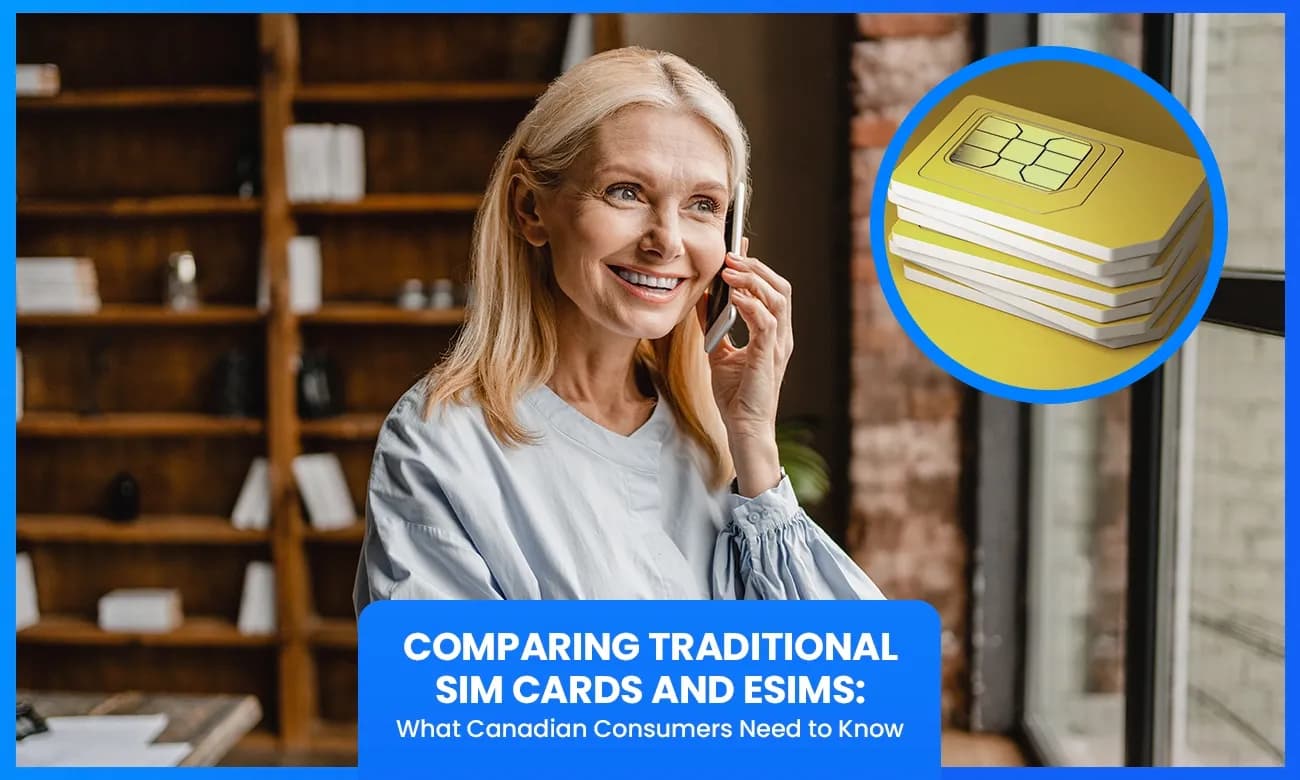
A traditional SIM card is a small, removable card inserted into mobile devices. It enables users to connect their devices to a carrier’s network and stores essential information such as their phone number and carrier details. SIM cards come in different sizes: standard, micro, and nano.
Benefits of a Traditional SIM Card
You can easily purchase one from electronic shops and supermarkets.
Universally compatible with most devices.
It is easier to use since swapping SIM cards between devices is straightforward.
Challenges with a Traditional SIM Card
They can be damaged or misplaced. When replacing a SIM, there can be a potential data loss.
SIM cards can be a limiting factor for smaller devices.
What is an eSIM?
An embedded SIM (eSIM) is built directly into a device’s motherboard and cannot be physically removed. It can be remotely programmed so users can activate their mobile service without a physical card.
Benefits of an eSIM
An eSIM lets you switch between carriers and plans without swapping physical SIM cards.
Since there’s no need for a SIM card slot, manufacturers can create sleeker designs for devices that can potentially accommodate additional features.
Challenges with an eSIM
Not all carriers support eSIM technology at present.
Not all devices are equipped with eSIM capabilities.
eSIM Carriers in Canada
If you live in Canada and want to switch to eSIM, this list is helpful if you are wondering which carriers offer eSIMs in Canada:
| Carrier | Fee | How to Request for eSIM? |
|---|---|---|
| Bell | Free | Request when ordering a new line. If you have an existing line, you may request an eSIM via the MyBell app or at the Bell store. |
| Fido | Free | Request via My Account app. |
| Rogers | Free | Request via MyRogers app. |
| Telus | Free | Both prepaid and postpaid are available on eSIM. |
| Virgin Plus | Free | Request through My Account. |
| Chatr Wireless | $10 | Visit Chatr Mobile store to purchase an eSIM. |
| Public Mobile | $5 | Request when ordering a new subscription. You can also request via Public Mobile app. |
| Fizz | - | Does not currently support eSIM. |
| Videotron | - | Does not currently support eSIM. |
Traditional SIM Card vs eSIM: Which is the One for You?
Choosing between a traditional SIM card and an eSIM in Canada depends on your needs and lifestyle. If you value simplicity and familiarity and often switch devices or travel, a traditional SIM card may still be the right choice. Its straightforward, physical nature makes it easy to handle and swap as needed, benefiting users who frequently change phones or carriers.
On the other hand, if you prefer a more streamlined and flexible approach to mobile connectivity, an eSIM could be the perfect fit for you. With its ability to hold multiple profiles, remote provisioning, and space-saving design, eSIM technology is tailored for today's dynamic mobile users in Canada.
Ultimately, consider your usage patterns, device compatibility, and Canadian carriers' services when deciding. As technology evolves, eSIMs will likely become more prevalent, paving the way for a future where connectivity is even more convenient and user-friendly.